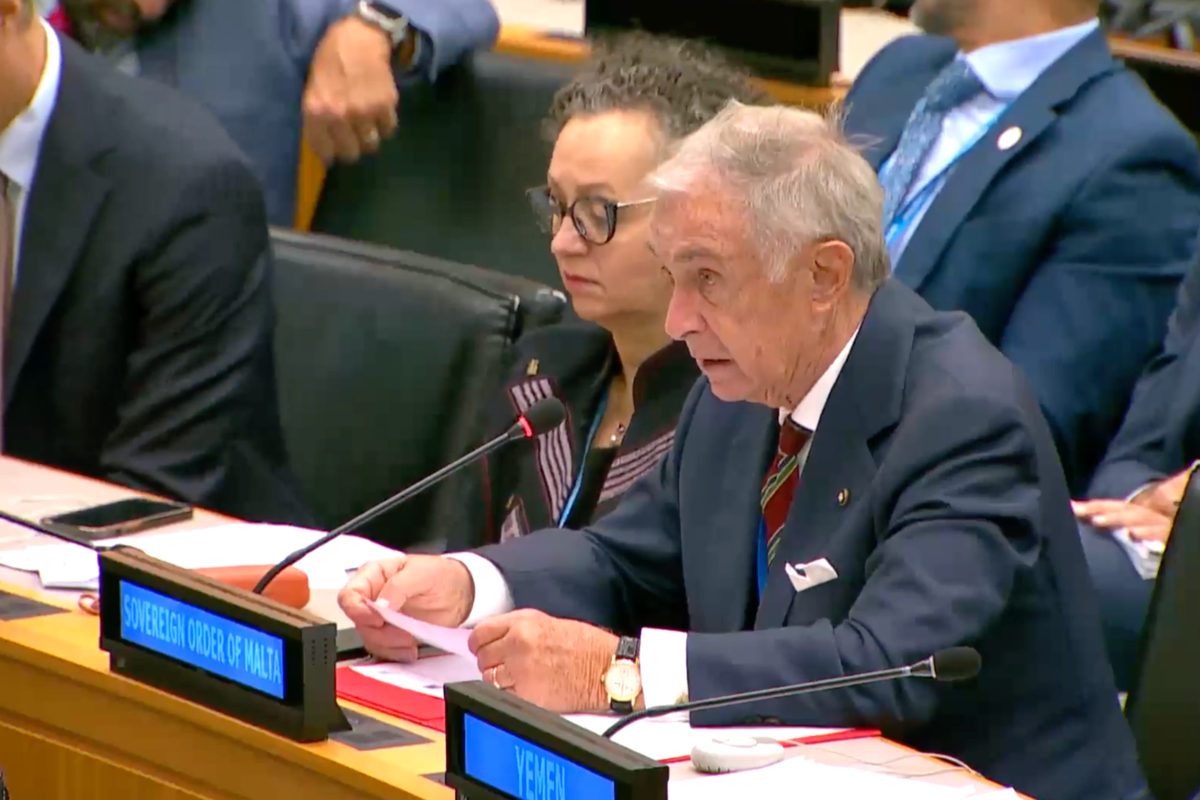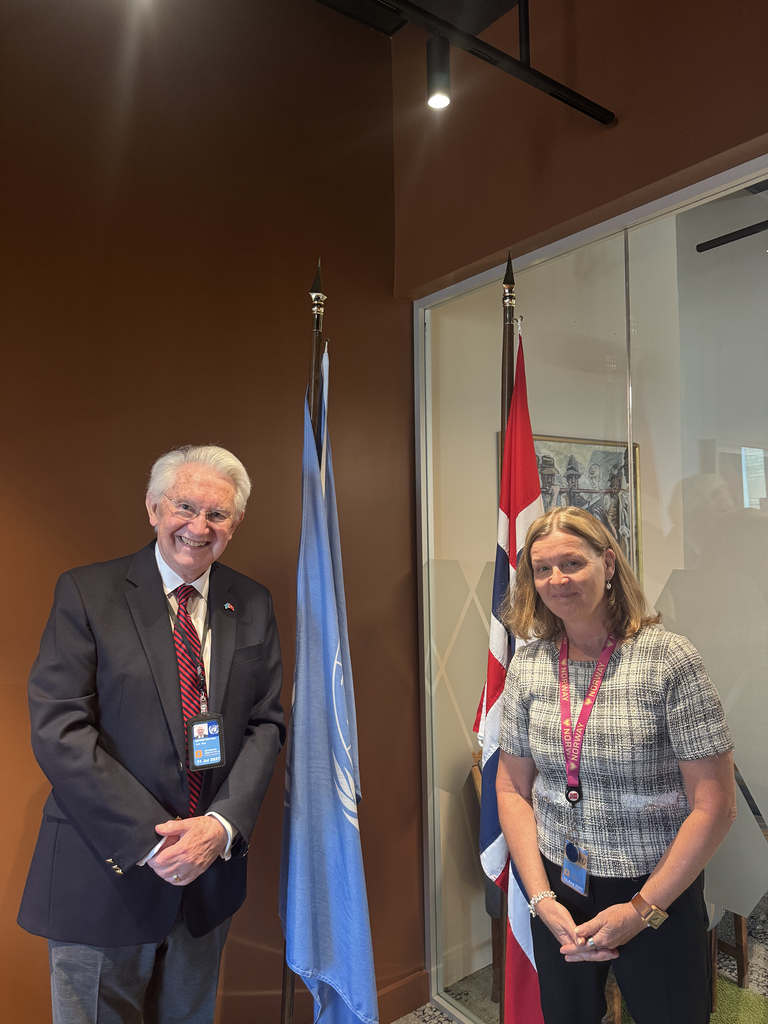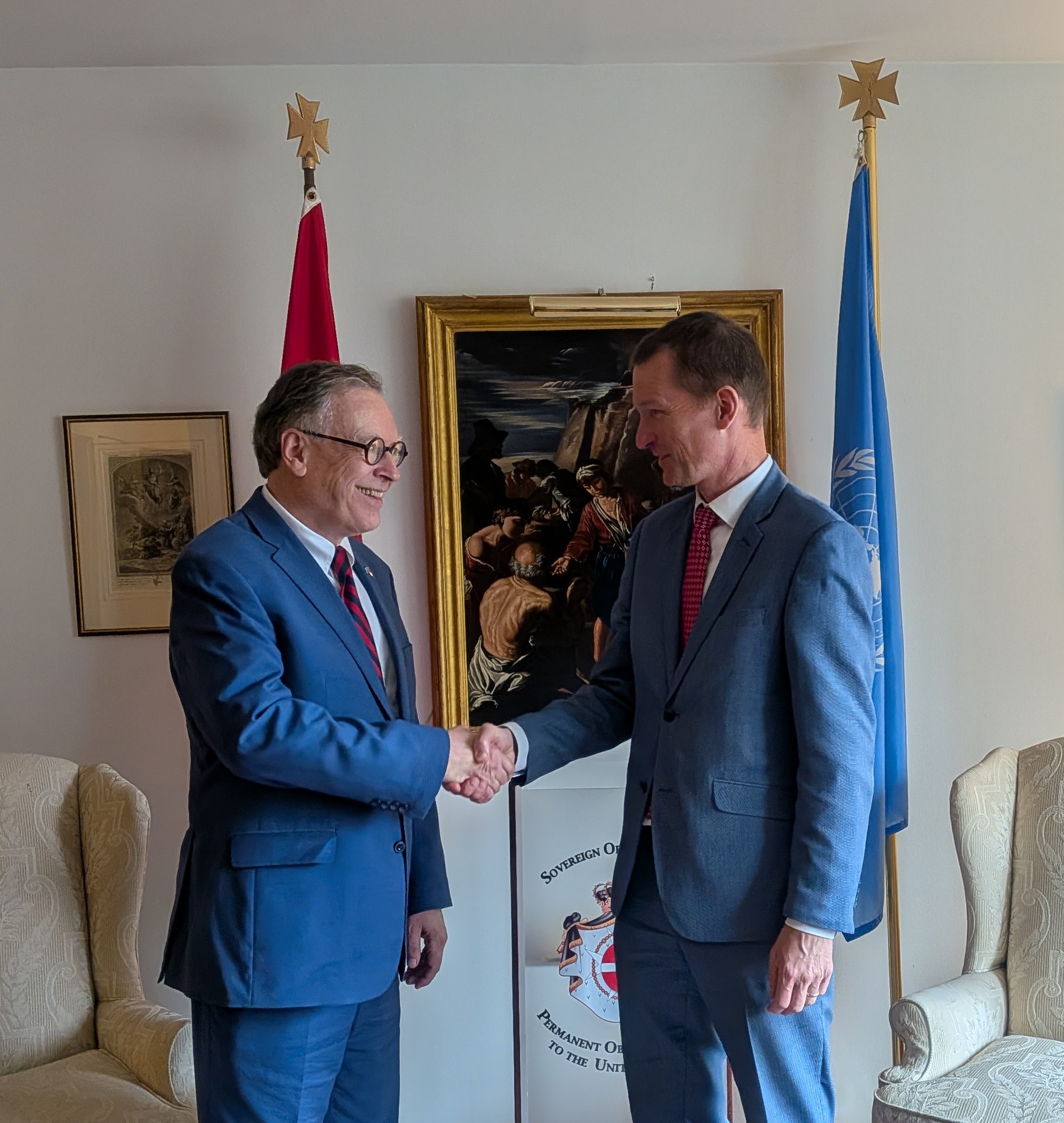
At the Third Committee session on 17 October, the Special Rapporteur on the Human Rights to Safe Drinking Water and Sanitation, Mr. Pedro Arrojo-Agudo, called for an ethical and human rights–based approach to water governance. He reminded Member States that water cannot be treated merely as an economic asset or a commodity, but must be recognized as a common good essential to life, health, and community well-being.
Mr. Arrojo-Agudo emphasized the need to prioritize water as life, affirming that access to drinking water and sanitation is a prerequisite for a dignified existence and a sustainable environment. He also warned against “water crimes”—industrial and productive activities that contaminate resources and endanger millions of lives—urging their prohibition. Managing water responsibly, he said, requires policies rooted in equity, accountability, and community participation, ensuring that no one is left behind.
Following this, Theresa Bulfon, Diplomatic Trainee of the Sovereign Order of Malta, highlighted the Order’s efforts to turn these principles into practical action. She noted that one in four people worldwide still lack access to safe drinking water, and billions more are without adequate sanitation. This deprivation is most acute in regions burdened by conflict and climate change.
Ms. Bulfon shared examples of the Order’s humanitarian work through Malteser International, including comprehensive WASH programs (Water, Sanitation, and Hygiene) in crisis-affected areas. In South Sudan, the Order has built or rehabilitated over 400 wells, installed 76 sanitation facilities, and equipped schools and health centers with handwashing stations. Solar-powered lighting in public latrines has improved safety for women and girls, while 15,000 people have been trained as hygiene multipliers, helping communities spread knowledge and sustain improvements. In the Democratic Republic of Congo, more than 127,000 people have gained access to safe water through wells, filters, and latrines.
The Sovereign Order of Malta continues to uphold and advocate for the human right to safe drinking water and sanitation, ensuring that its humanitarian programs protect lives, promote dignity, and strengthen communities worldwide.