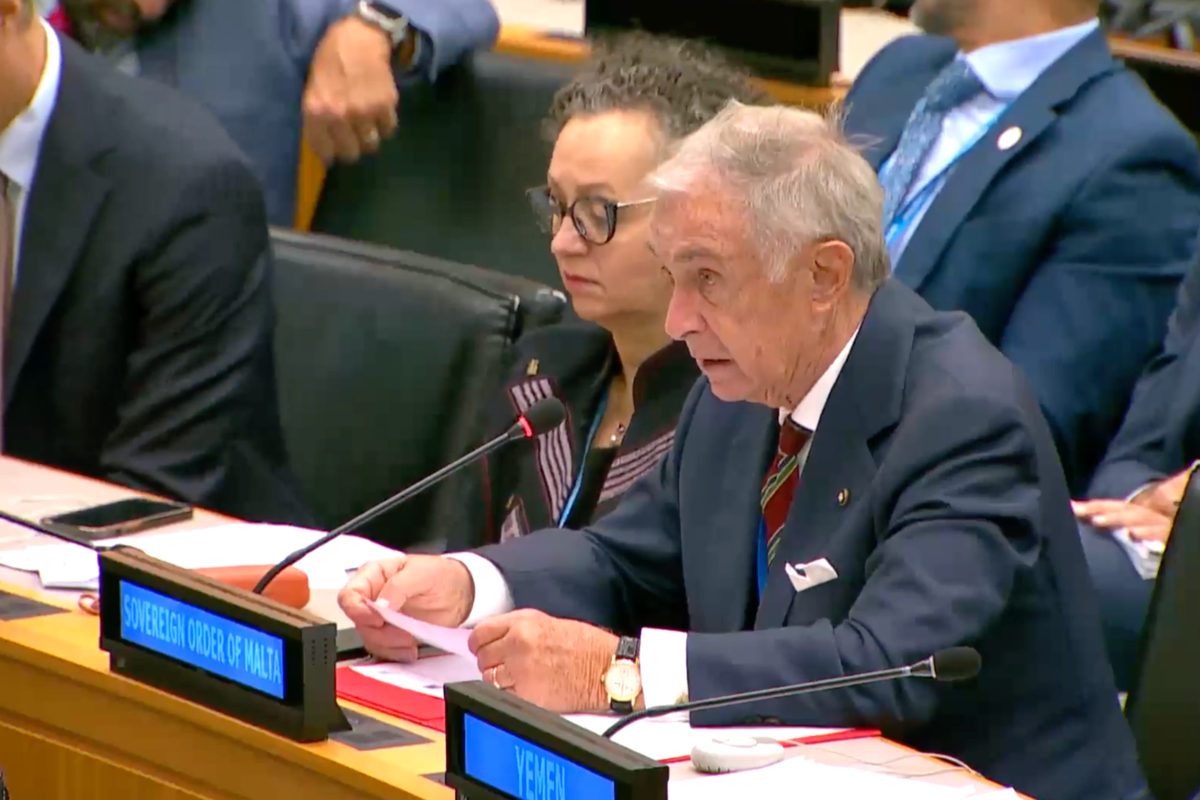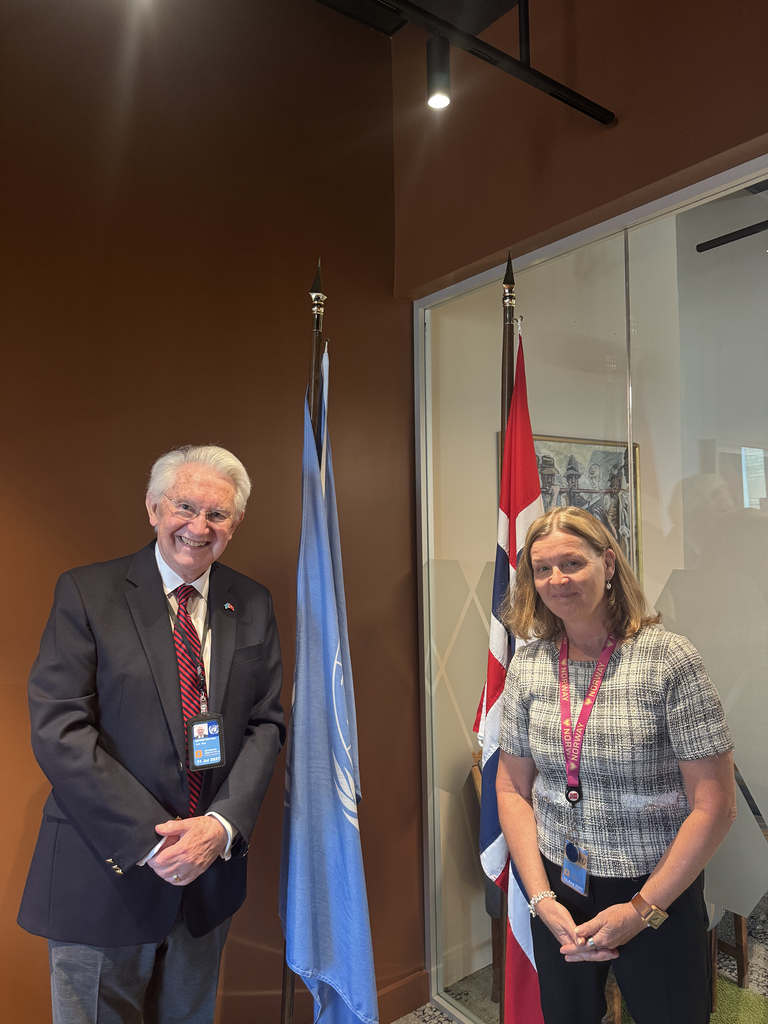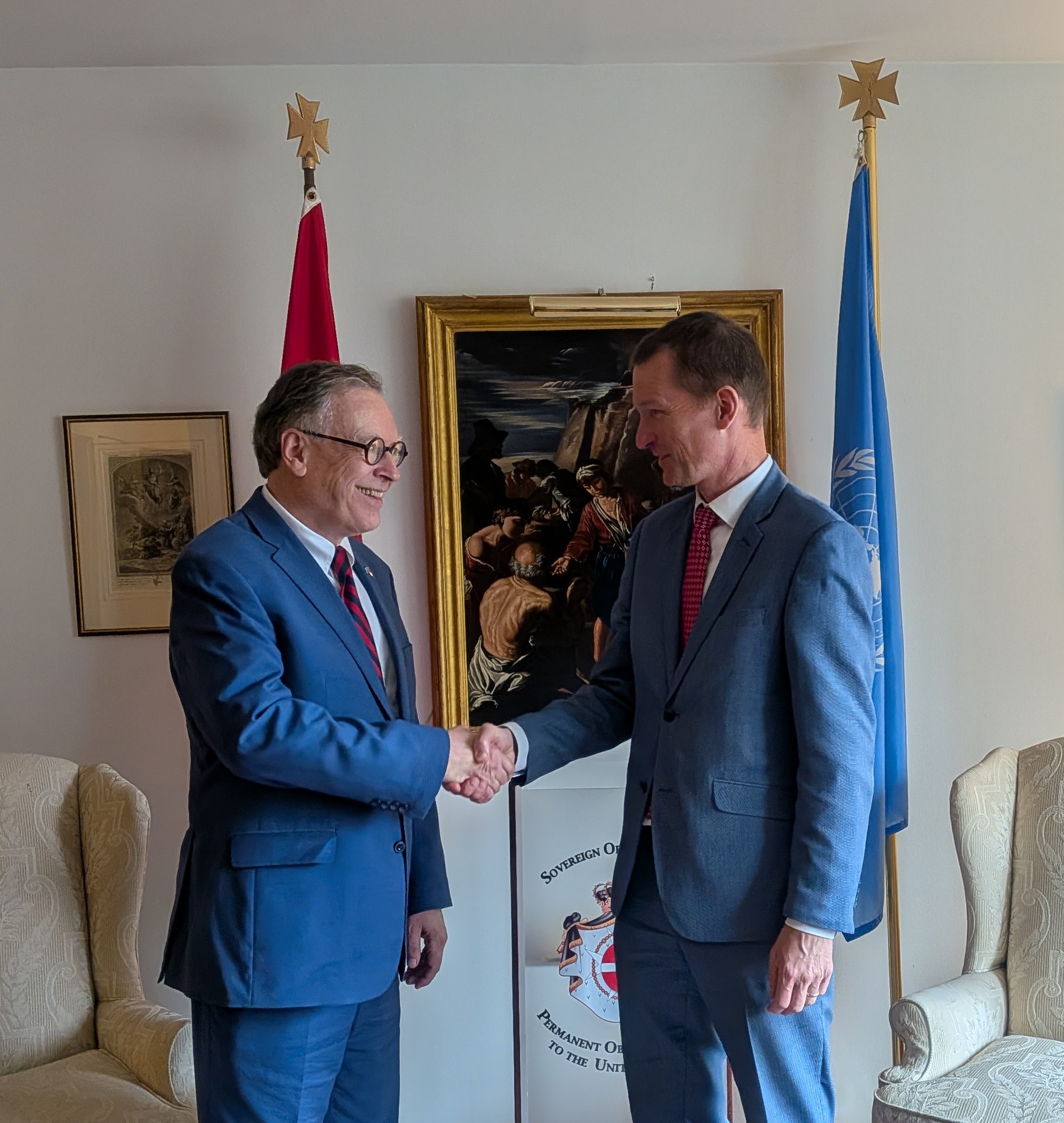
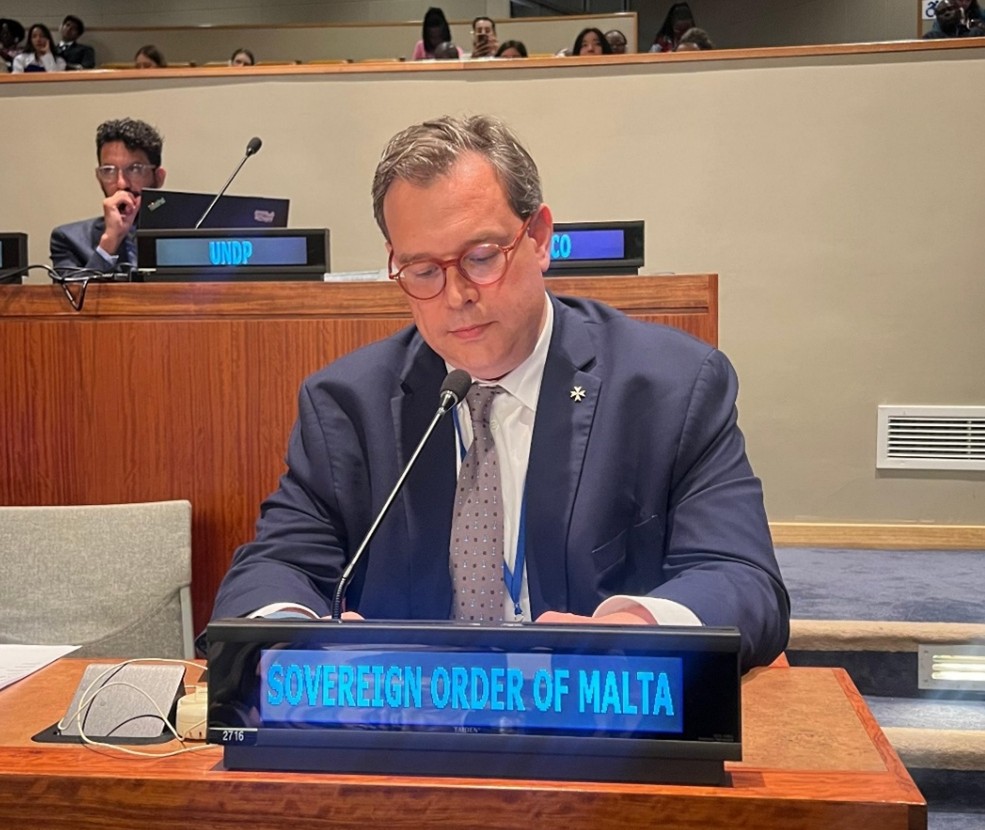
The United Nations High-Level Political Forum on Sustainable Development (HLPF) is the UN’s central platform for reviewing global progress toward the 2030 Agenda and its 17 Sustainable Development Goals. Convening world leaders, diplomats, civil society, and experts each July in New York, it serves as both a checkpoint and a catalyst, where urgent global challenges are debated, solutions are shared, and partnerships are forged. At this year’s HLPF, held in mid-July 2025, the Sovereign Order of Malta delivered a series of compelling addresses that spanned themes from sovereignty in the face of climate threats, to accelerating SDGs in Africa, to defending human dignity in the age of artificial intelligence.
On July 16, 2025, Ambassador Paul Beresford-Hill, Permanent Observer of the Sovereign Order of Malta at the UN, spoke on the unique vulnerabilities of Small Island Developing States, many of which face the existential threat of rising seas and climate change. Drawing a parallel between the Order’s own loss of territorial control over two centuries ago and today’s looming displacement of island nations, he recounted the Order’s expulsion from Malta in 1798 by Napoleon Bonaparte. Despite losing its land, the Order preserved its sovereignty through diplomatic recognition, moral purpose, and international alliances, surviving exile in Italy, asylum in Russia, and accreditation of its representatives at the 1814 Congress of Vienna as ministers’ plenipotentiary. “This stands as proof: sovereignty does not have to be rooted in land, but in recognition, the will to survive, and the moral purpose that gives it life,” he said. Ambassador Beresford-Hill highlighted innovative responses from island nations, such as Tuvalu’s digital nationhood project and the Maldives’ floating city, framing them as urgent measures for survival rather than mere futuristic experiments. He called on the international community to uphold functional sovereignty through diplomacy, legal status, and humanitarian support, even when physical territory is lost. Closing with Pope Francis’ words, “No one is saved alone; we can only be saved together,” he urged collective action to ensure sovereignty does not disappear in silence.
On July 15, 2025, Fra’ Nicola Tegoni, a member of the Sovereign Council of the Sovereign Order of Malta, addressed the Forum with a focus on Africa and other vulnerable regions. Speaking on behalf of Malteser International, the Order’s humanitarian agency, he stressed that sustainable development must be rooted in human dignity rather than merely meeting numeric targets. He described work in the Democratic Republic of Congo, Nigeria, Uganda, and Ethiopia to strengthen healthcare, promote gender equality, and foster climate-resilient livelihoods. Fra’ Nicola called for anticipatory action, flexible funding, and locally driven solutions, stressing that Africa’s progress depends on community-led partnerships that turn commitments into concrete results.
Returning to the podium on July 16, Fra’ Nicola Tegoni addressed Sustainable Development Goal 8 on decent work and economic growth. He emphasized that for the Order of Malta, work is not merely an economic function but a human expression of dignity, purpose, and service to the common good. He drew from the Order’s Interfaith Conference on the Ethical Issues of Artificial Intelligence, held at the UN earlier in the year, warning that automation could erode the deeper value of work—its ability to foster meaning, cooperation, and belonging. Citing Professor John Tasioulas of Oxford University, he noted that AI’s trajectory is a matter of human choice, not inevitability. Quoting Pope Francis, he reminded delegates that “what gives dignity is work,” urging policymakers to safeguard the human-centered nature of labor and ensure that technological advances do not strip away the social and personal fulfillment that comes from contributing to a greater purpose.
Across these interventions, the Sovereign Order of Malta’s message was one of urgency and solidarity. Sovereignty can endure without land if anchored in recognition and moral purpose. Development must be driven by human dignity. Economic growth must never come at the expense of the meaning and community that decent work provides. From small island states fighting for survival, to African communities striving for progress, to the global workforce navigating AI’s rise, the Order’s interventions at the HLPF underscored a timeless truth: resilience is not just about enduring hardship, but about preserving the dignity, purpose, and solidarity that make survival meaningful.