New York, 17 October 2025 — During the session of the Third Committee of the United Nations General Assembly on the 17th of October, Special Rapporteur on Human Rights and the Environment Ms. Astrid Puentes Riaño presented her report on the right to a safe, clean, healthy and sustainable environment. She underlined that Environmental Impact Assessments (EIAs) are mandatory under customary international law and remain one of the most important tools for environmental protection. Ms. Puentes Riaño noted that EIAs are included in more than 180 national legislations and regional treaties, yet their purpose and scope are often overlooked. She highlighted challenges such as conflicts of interest, inadequate monitoring, poor quality assessments, and the misconception that EIAs are merely procedural requirements. She called on states to avoid deregulation trends and ensure that all assessments are comprehensive, addressing domestic and transboundary, climate, biodiversity, cultural, social and human rights impacts. Ms. Puentes Riaño reaffirmed that all states have an obligation to prevent environmental harm, particularly transboundary harm, and must follow principles of precaution, prevention, proportionality, equity and access to justice, as recently reaffirmed by the advisory opinion of the International Court of Justice.
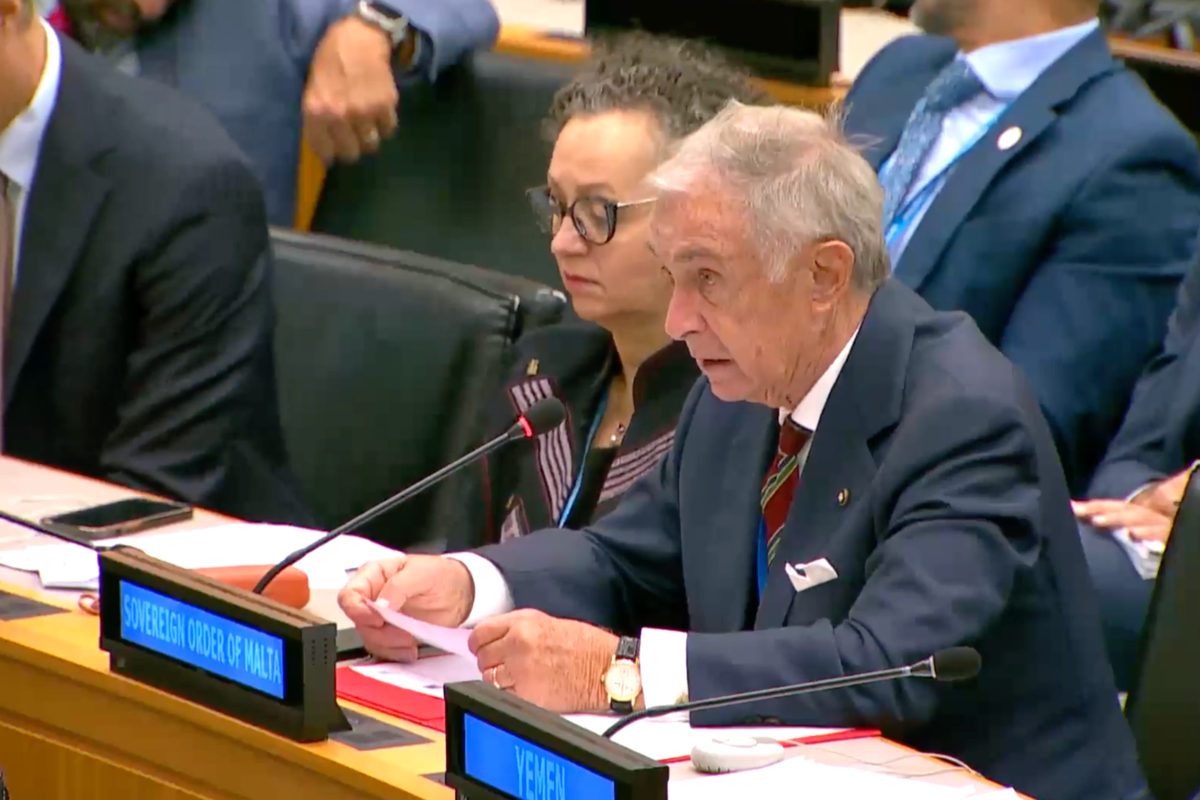
In response, Counsellor Mrs. Marissa Blackett, representing the Sovereign Order of Malta, emphasized the connection between environmental protection and human rights, describing the triple crisis of climate change, biodiversity loss and pollution as a shared human challenge. She noted that the effects of climate change are evident in humanitarian crises where Malteser International, the Order’s relief agency, is active. Droughts, floods and storms threaten ecosystems and the rights to life, health, food, water and sanitation. Mrs. Blackett referred to work in India’s Rajasthan region, where farmers receive support through climate-adapted seeds, sustainable farming tools and organic pesticide production, and to projects in Colombia where mangrove restoration strengthens biodiversity, protects coastlines and supports local women’s livelihoods. She stressed that prioritizing short-term profit over long-term sustainability endangers future generations, and called for action grounded in sustainability, accountability and investment in communities, reaffirming that environmental protection is essential for human dignity and justice.