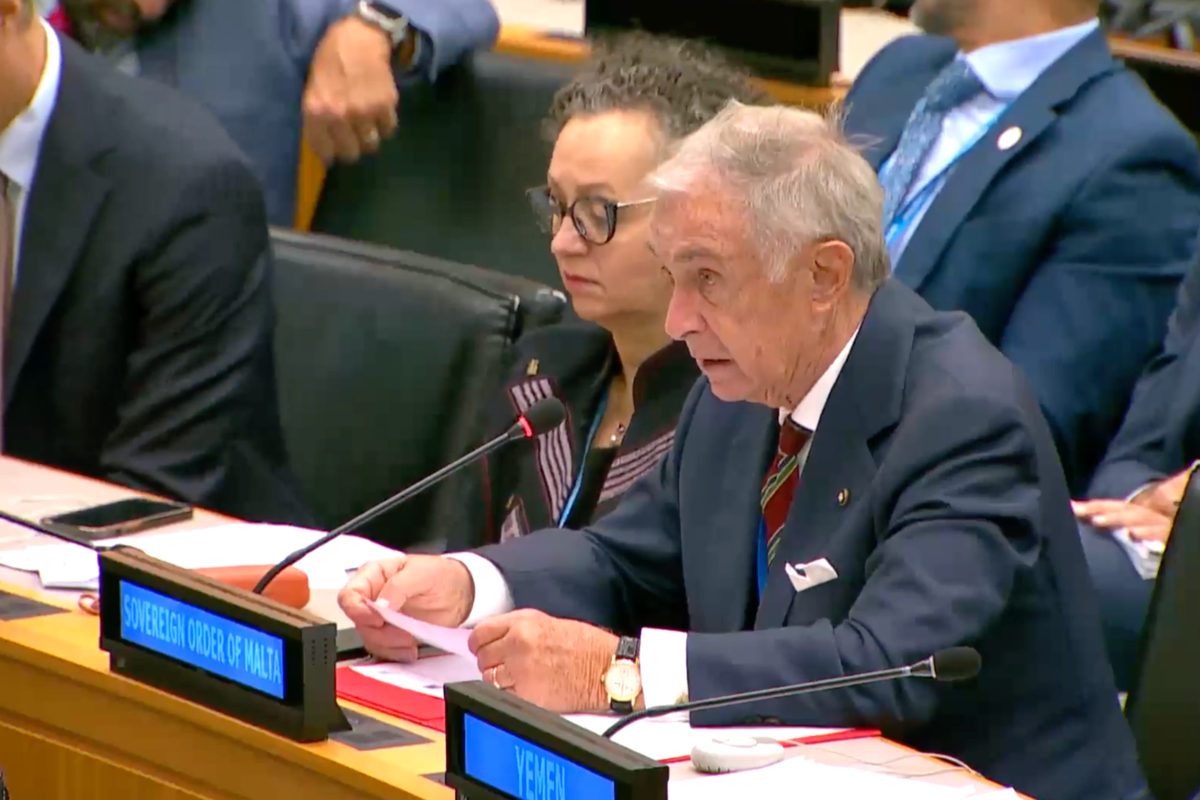
On October 16th, Counsellor Mrs. Marissa del Rosario-Blackett addressed the Third Committee on the Rights of Peasants and other people working in rural areas.
The Chair-Rapporteur of the Working Group on the Rights of Peasants and other people working in rural areas to the UN presented a timely and urgent call to action, emphasizing that peasants and rural workers form the foundation of global food systems, producing over 70% of all food consumed globally. The Rapporteur noted that despite managing 80% of the world’s farms and leading agroecological innovation, these communities consistently face deeply entrenched barriers and exclusion from key decision-making spaces. The report highlighted that structural discrimination, particularly against women (who own less than 15% of agricultural land globally), Indigenous Peoples, older persons, and youth, perpetuates their marginalization. This exclusion is worsened by urban-centric governance and the dominance of corporate interests, which erode land rights and increase rural poverty, making true participation in multi-stakeholder forums elusive.
Counsellor Mrs. Marissa highlighted that the majority of the world’s poor reside in rural settings, making them uniquely susceptible to crises and economic shocks while often being excluded from formal social safety nets. She emphasized that expanding social protection measures to cover the informal rural economy is essential for providing a “trampoline toward self-reliance.” She stressed that rural workers are the frontline defenders of food security, biodiversity, and climate action, and their rights to dignity, agency, and opportunity must be restored by shifting the focus from aid dependency to human flourishing and self-sufficiency.
She provided specific examples of the Order’s agro-humanitarian approach, citing the six Agro-humanitarian Centres in Lebanon that support economic recovery, increase local food availability, and strengthen resilience by providing climate-smart training and setting up Food Processing Units to generate higher income. Furthermore, she mentioned the work in Colombia to address child malnutrition while establishing collective beehives to support the local economy.
To conclude, Mrs. Marissa urged to urgently prioritize the economic diversification of rural areas and the creation of non-farm opportunities, especially for rural youth, to keep these communities vibrant. She calledto look beyond purely humanitarian assistance and make a profound, long-term investment in their self-determination.