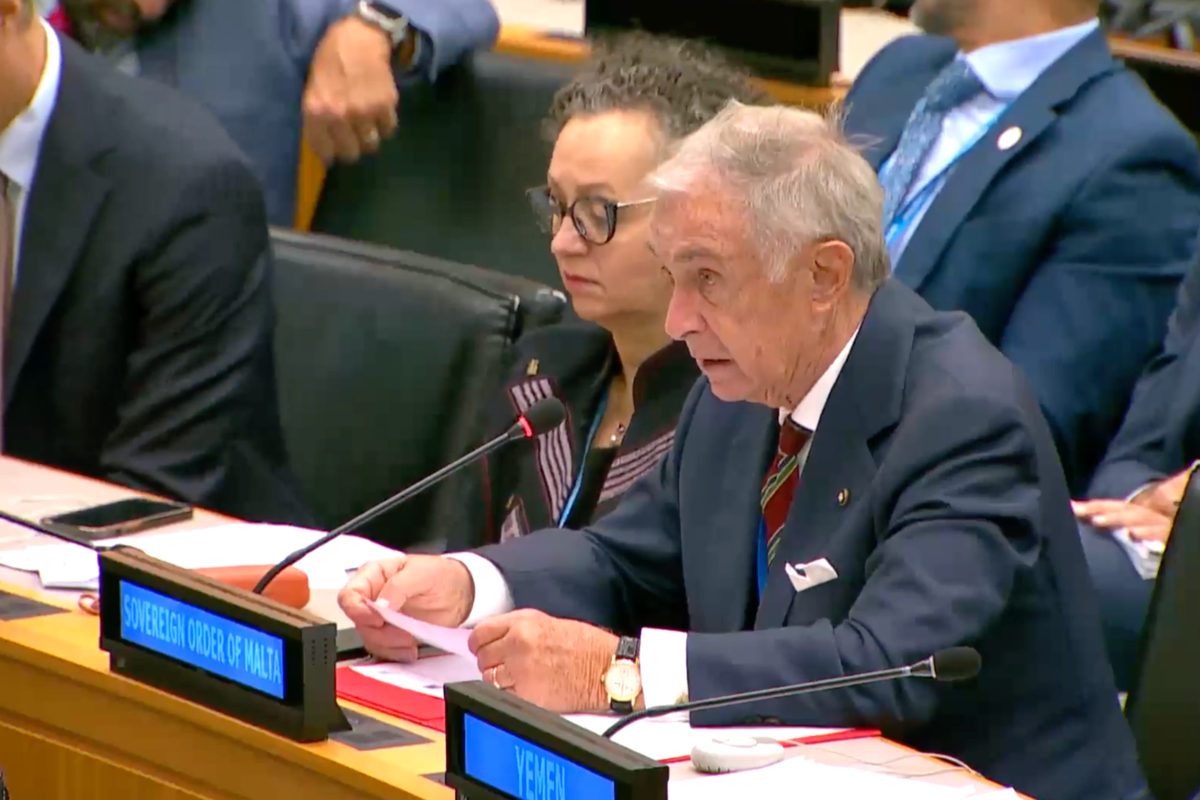
On October 15th, Counsellor Mrs. Marissa del Rosario-Blackett addressed the Third Committee on the Promotion and Protection of Human Rights, led by the High Commissioner Mr. Volker Türk.
The United Nations High Commissioner for Human Rights, Mr. Volker Türk, emphasized the pivotal nature of the current moment for human rights. He raised concerns over the spreading disquiet, disenfranchisement, disillusionment, and disarray, noting that several governments are “openly flouting” universal human rights standards. Furthermore, he detailed critical situations in Sudan, highlighting the disregard for international law and the devastating situation in El Fasher; Ukraine, noting the deadly bombardment of civilian infrastructure; Myanmar, where civilians suffer the “cruellest toll”; and the Democratic Republic of the Congo, where encouraging peace efforts need to be matched by a changing reality on the ground and genuine accountability. Regarding Gaza, he welcomed the release of hostages and detainees as part of the ceasefire’s first phase but stressed the need for a permanent ceasefire, humanitarian aid, and accountability for gross violations, all aimed at the realization of the Palestinian people’s right to self-determination.
The High Commissioner concluded with a loud alarm bell about the precarious financial situation of his Office, and warned that without adequate funding, grave human rights violations may “stay hidden from the world,” giving perpetrators a free pass and leaving people without crucial support, which would be especially detrimental to developing areas like the governance of Artificial Intelligence.
Counsellor Blackett affirmed that the Sovereign Order of Malta views human rights not as an abstract concept, but as a practical, moral imperative to safeguard the dignity of those on society’s furthest margins. The Order’s global work confirms that the most fundamental rights—to life, health, and dignity—are most violated in conflict, disaster, and profound poverty. She emphasized that the Order’s approach, through its humanitarian relief agency, begins on the front lines with tangible support, including medical aid, shelter, and clean water. The Order focuses on restoring the agency and self-sufficiency of people displaced by war by ensuring continuity of care, providing maternal and child services, and specialized support for the disabled in regions like Syria, Lebanon, and sub-Saharan Africa.
Furthermore, she raised the urgent challenge of new technologies, noting Artificial Intelligence (AI) is being used to spread disinformation that erodes civilian rights. She stressed that human agency, with human rights at its core, must remain central to AI’s governance and regulation to ensure its potential for sustainable development is ethically realized.
She concluded by underscoring the need for sustained political will to protect human rights, calling the unprecedented losses of humanitarian personnel in 2024 unacceptable. She urged Member States to prioritize the safety of humanitarian workers and ensure unhindered access.