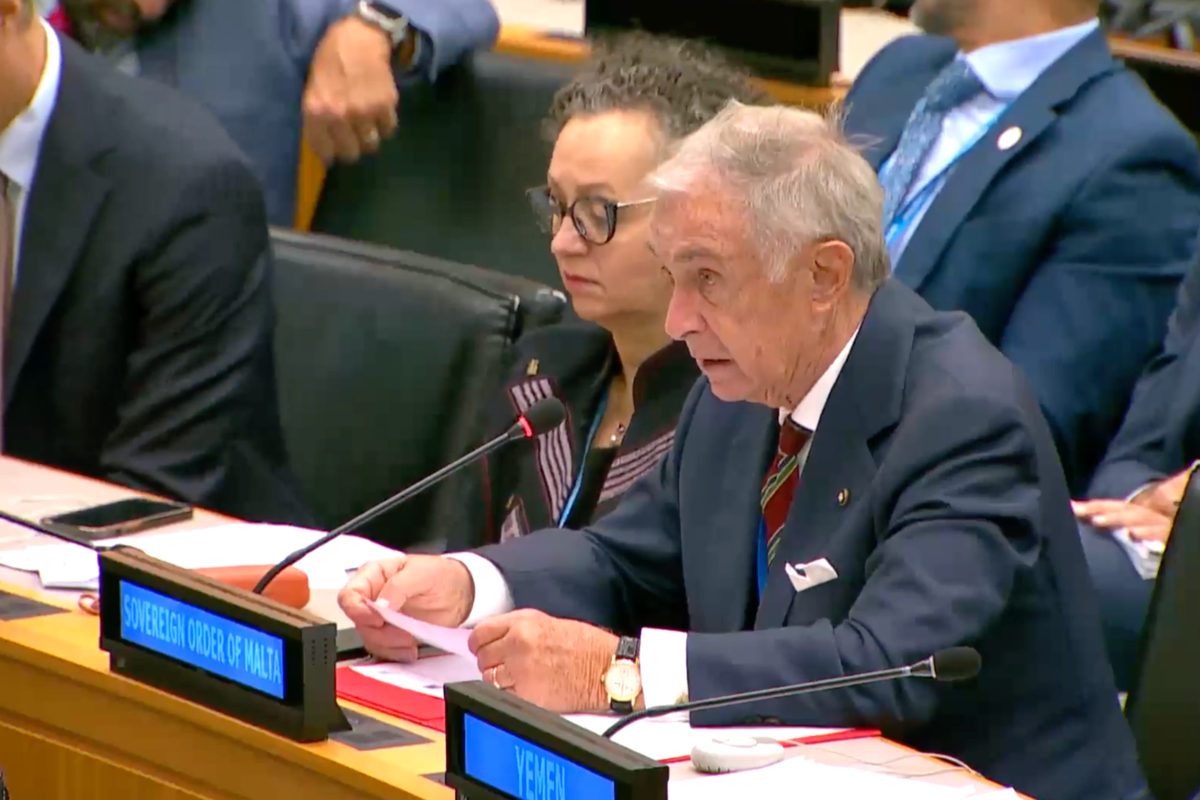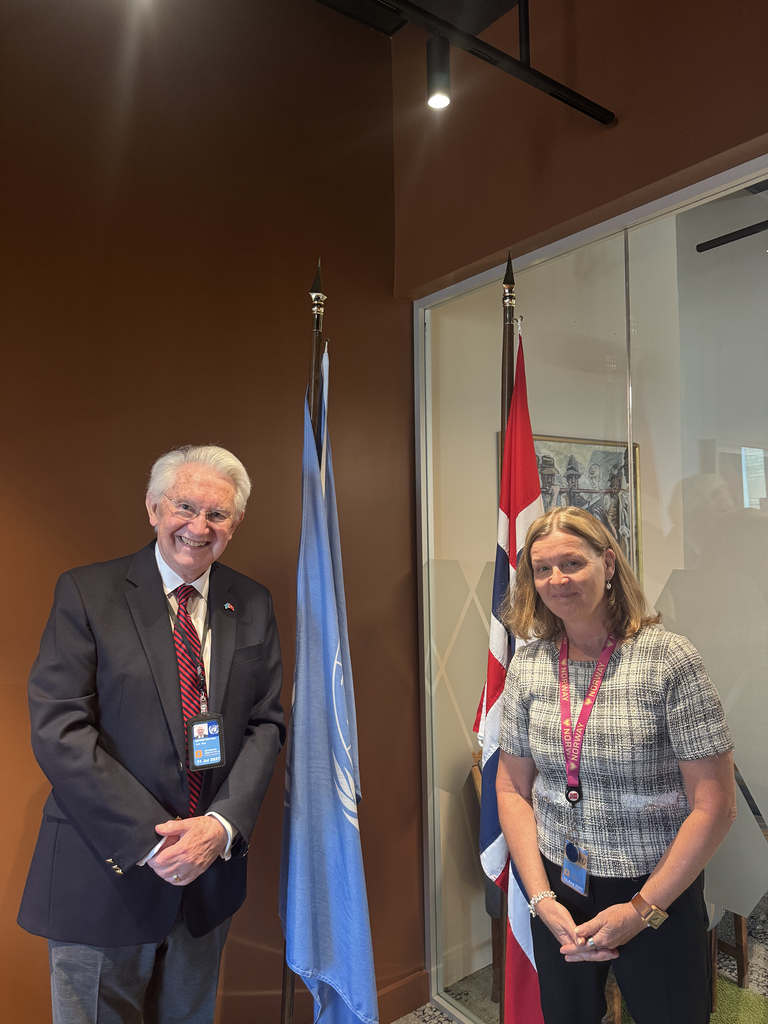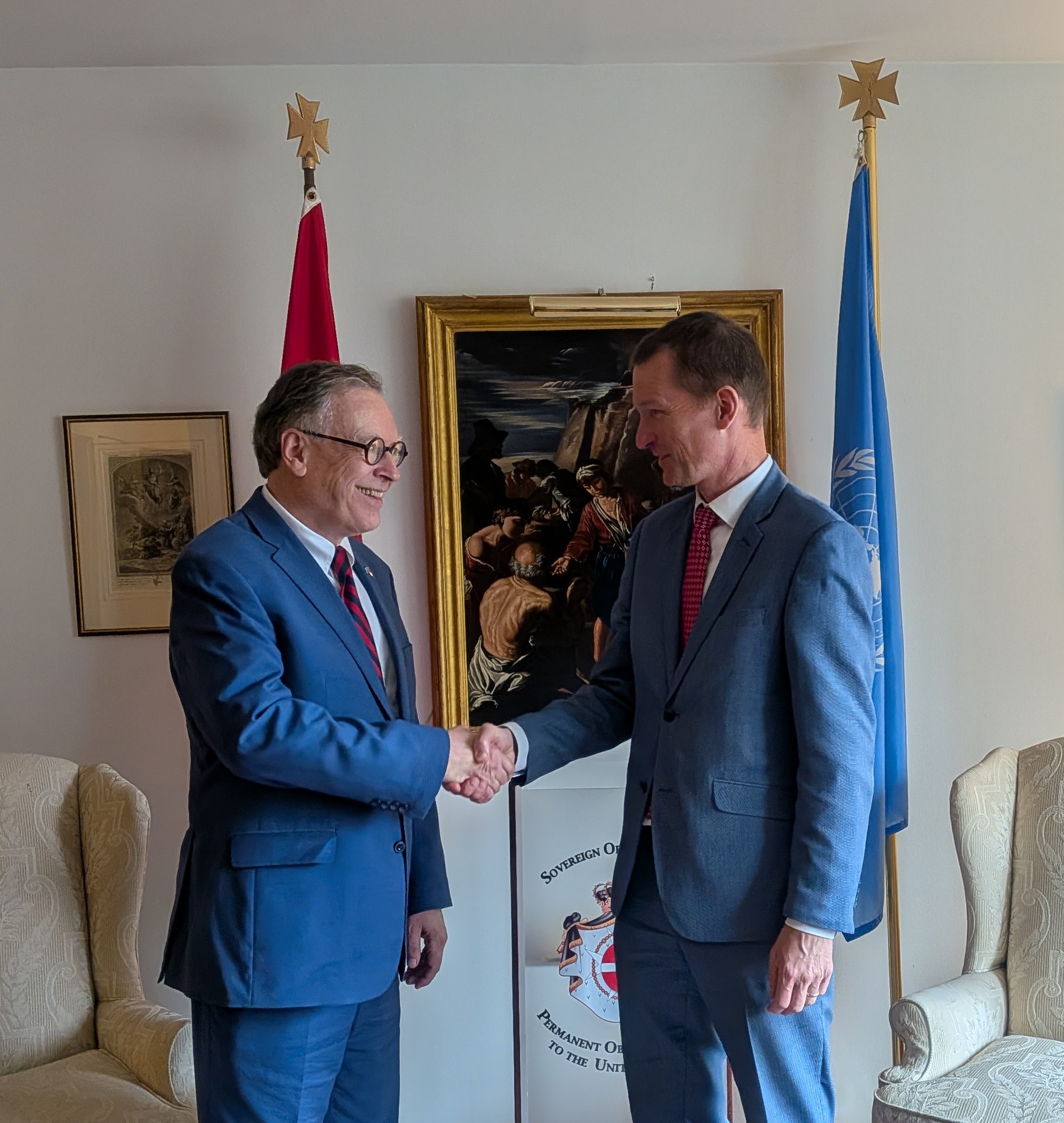
On October 22nd, the Third Committee of the General Assembly held a briefing on the elimination of discrimination against persons affected by leprosy (Hansen’s disease) and their family members, featuring a presentation by Ms. Beatriz Miranda-Galarza, Special Rapporteur on the elimination of discrimination against persons affected by leprosy, followed by an intervention from Senior Counsellor Brien Horan of the Sovereign Order of Malta.
Ms. Miranda-Galarza, presented her report entitled “Access Delayed, Rights Denied: Bottlenecks in the Leprosy Drug Supply Chain and Their Daily Impact on Persons Affected.” She underscored that while leprosy is entirely curable, systemic delays in access to medicine continue to deny people their fundamental human rights. These failures, she stressed, are not medical but political and structural, as they are rooted in weak health systems, bureaucratic barriers, and stigma.
The Special Rapporteur described the human cost of these failures, from irreversible disability to social exclusion and deepened poverty. She highlighted that delays in treatment amount to human rights violations, particularly affecting women, children, and marginalized groups. Calling for urgent reform of the leprosy drug supply chain, she urged States to guarantee stable drug supplies, simplify regulatory procedures, strengthen local health infrastructure, and ensure meaningful participation of persons affected in decision-making.
Ms. Miranda-Galarza further emphasized that access to medicine must be understood as a human right, not a privilege, and called for the renewal and strengthening of her mandate, which is currently the only UN mechanism dedicated to protecting the rights of persons affected by leprosy and their families.
Delivering the Order’s statement, Senior Counsellor Brien Horan reaffirmed that the stigma surrounding persons affected by leprosy remains one of the most persistent and painful barriers to their inclusion in society. Despite the disease being curable, misconceptions and fear continue to cause discrimination in employment, education, housing, and community life, often extending to family members.
Counsellor Horan noted that stigma not only isolates individuals but also discourages them from seeking treatment, perpetuating both the disease and the prejudice surrounding it. He crystalized this point as he said: “no one affected by leprosy should have their identity diminished or their humanity denied.”
Through its humanitarian relief agency, Malteser International, the Sovereign Order of Malta is active in thirteen countries across Africa and South-East Asia, supporting screening, treatment, rehabilitation, and reintegration initiatives. In Vietnam, the Order supports the Quyhoa Central Leprosy and Dermatology Hospital, which provides more than 15,000 consultations annually, inpatient care for 9,000 patients, and supplies nearly 2,000 prostheses, while training local medical staff.
Counsellor Horan reaffirmed that the Order’s mission extends beyond medical treatment to include psychological support, social reintegration, and empowerment of persons affected by leprosy. He called on Member States and partners to confront both the disease and the discrimination it breeds, ensuring that all persons affected can live independent, dignified lives free from stigma and exclusion.
The Sovereign Order of Malta remains steadfast in its mission to accompany persons affected by leprosy, working alongside local partners to promote care, inclusion, and human dignity.