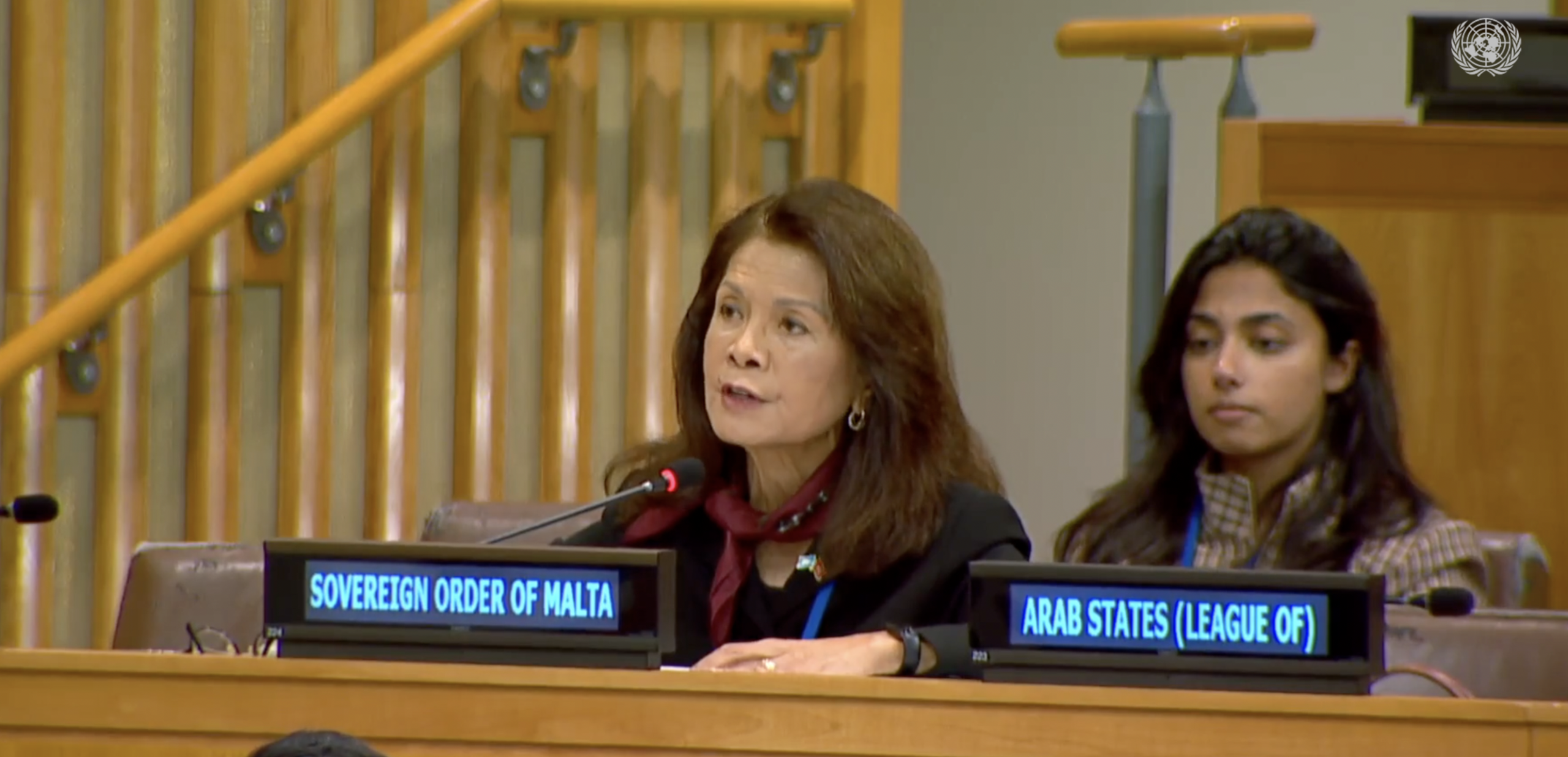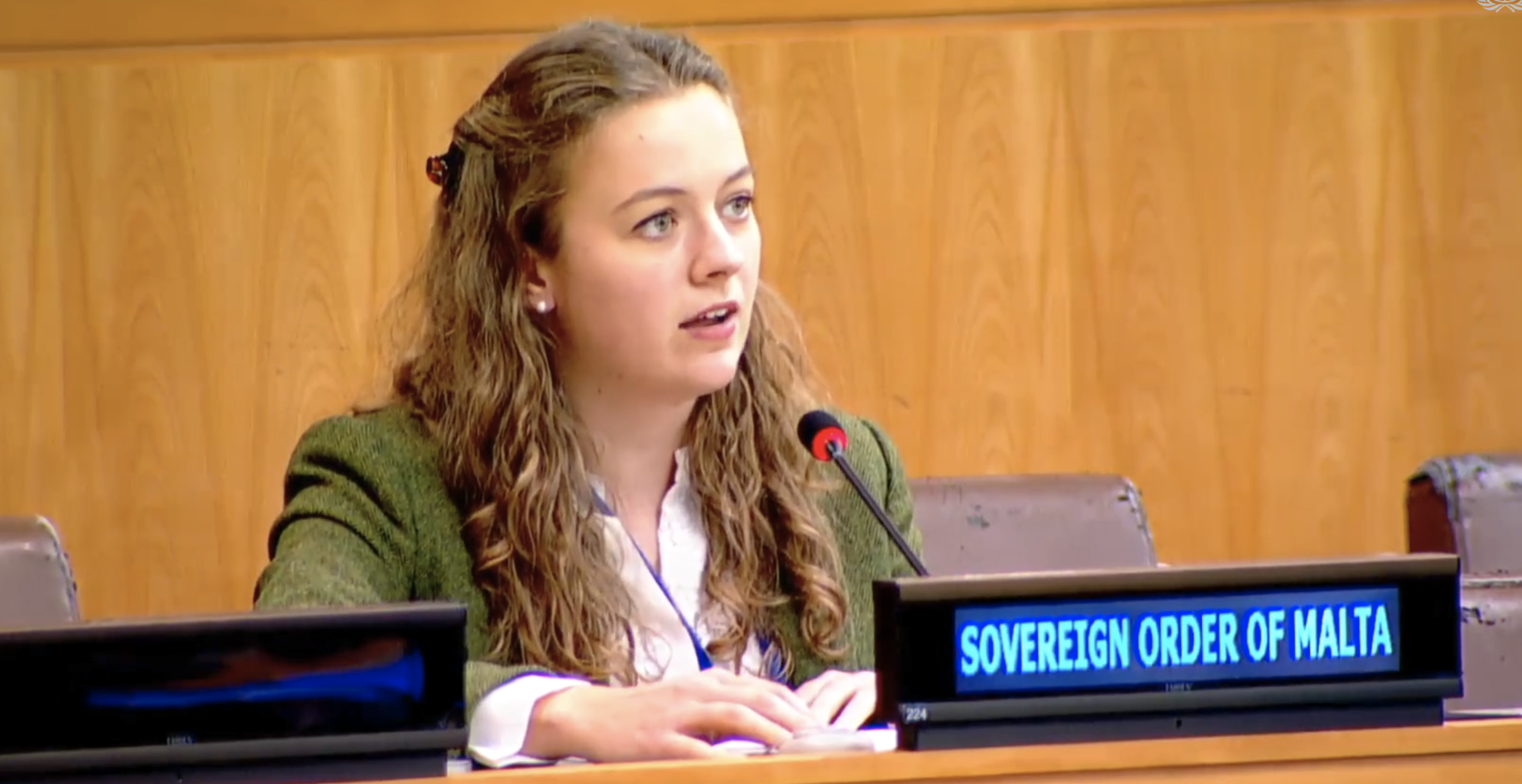
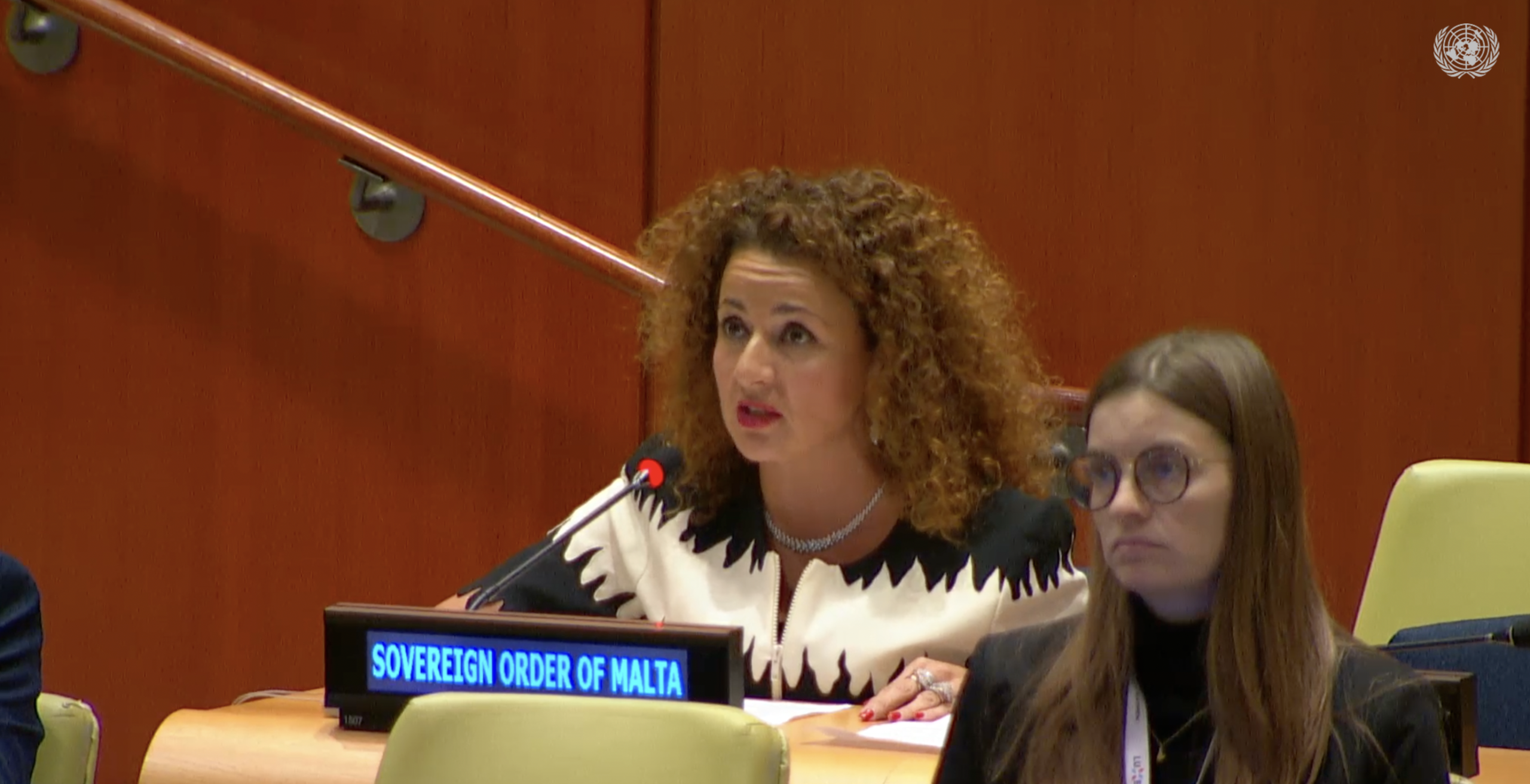
On 19 October 2026, Professor Benedetta Audia, Advisor to the Sovereign Order of Malta, addressed the Sixth Committee of the 81st session of the United Nations General Assembly on the status of the Protocols Additional to the Geneva Conventions of 1949 relating to the protection of victims of armed conflicts.
The intervention reaffirmed the continued importance of the Geneva Conventions and their Additional Protocols in safeguarding human dignity amid increasingly destructive conflicts. The Order expressed grave concern over persistent violations of international humanitarian law, including torture, sexual violence, sexual slavery, forced pregnancy and the starvation of civilians, emphasising the urgent need to strengthen accountability and protect the most vulnerable, particularly women and children.
Professor Audia highlighted that the consequences of armed conflict extend far beyond physical injury and destruction. Psychological trauma can affect individuals, families and entire communities for generations, undermining reconciliation, social cohesion and development. Drawing on the Order’s humanitarian mission and its principles of impartiality and neutrality, she underscored the importance of addressing the lasting mental health and psychosocial needs of those affected by violence.
The ongoing conflict in Ukraine served as a central example. Children living in frontline areas face prolonged periods of fear and isolation, disrupted education and the loss of stability, while those displaced by the war often encounter additional barriers to healthcare, education and protection. Together with its partners, the Order provides psychosocial support, mental health services and specialised recovery programmes for children, through both digital and in-person assistance. The intervention stressed, however, that existing efforts remain far below the scale of the needs.
In Haiti, where gang violence and political instability continue to fuel a humanitarian crisis, the Order supports medical care, nutrition and food security for malnourished children and displaced families. Professor Audia also drew attention to the plight of families affected by prolonged conflicts, including in Syria and Sri Lanka, highlighting their right to truth and justice, as well as the need to address the risks of human trafficking and exploitation faced by populations living in or fleeing conflict zones. In this regard, she referred to the work of support centres such as the Bakhita Centre in Lagos, Nigeria, which provides survivors with shelter, psychosocial assistance and vocational training.
Concluding the intervention, the Order called on Member States to reaffirm their commitment to the Geneva Conventions and their Additional Protocols, strengthen accountability mechanisms and use all available diplomatic means to protect civilians. Upholding international humanitarian law, Professor Audia emphasised, is essential not only to safeguarding lives, but also to preserving hope, human dignity and the possibility of lasting peace.