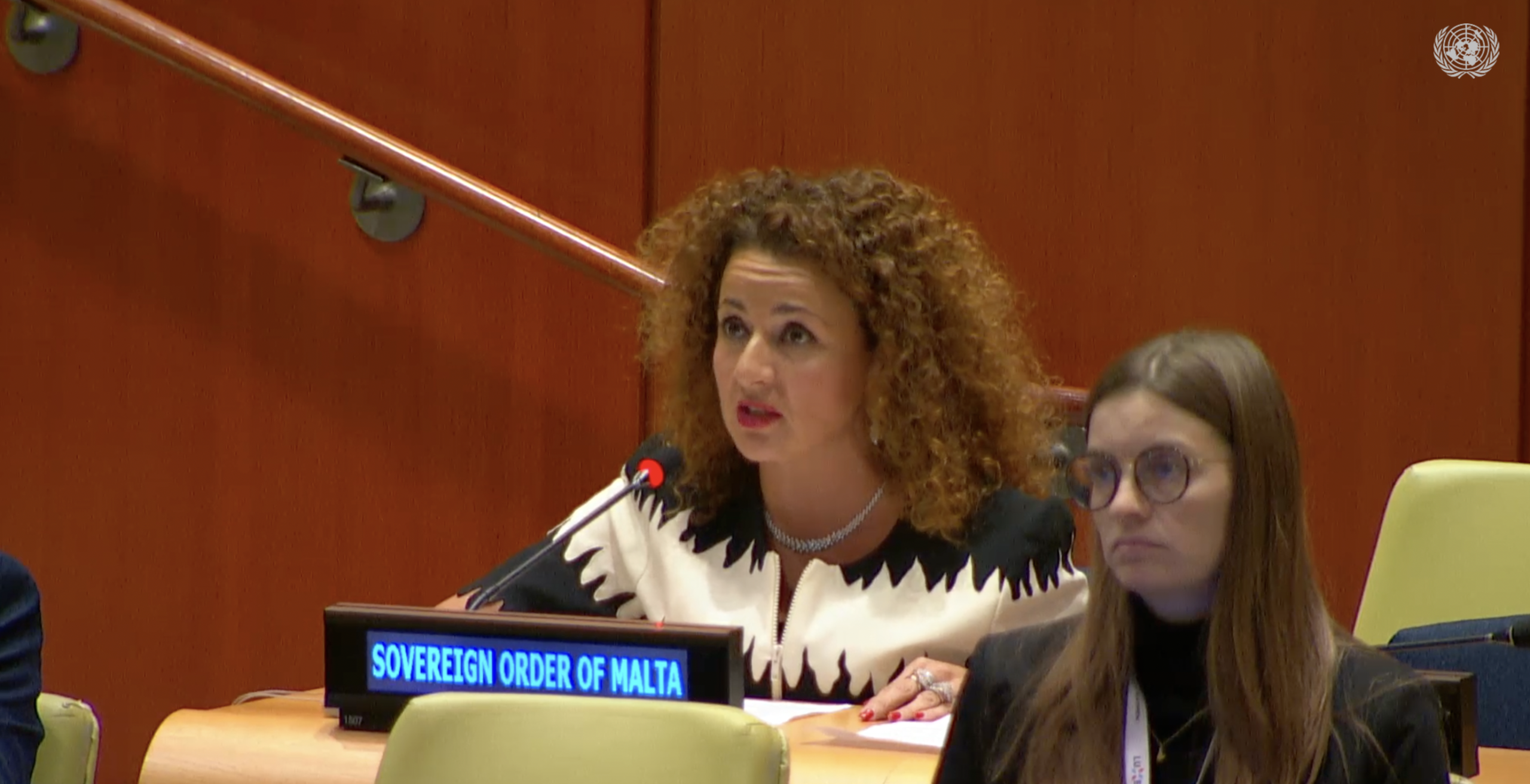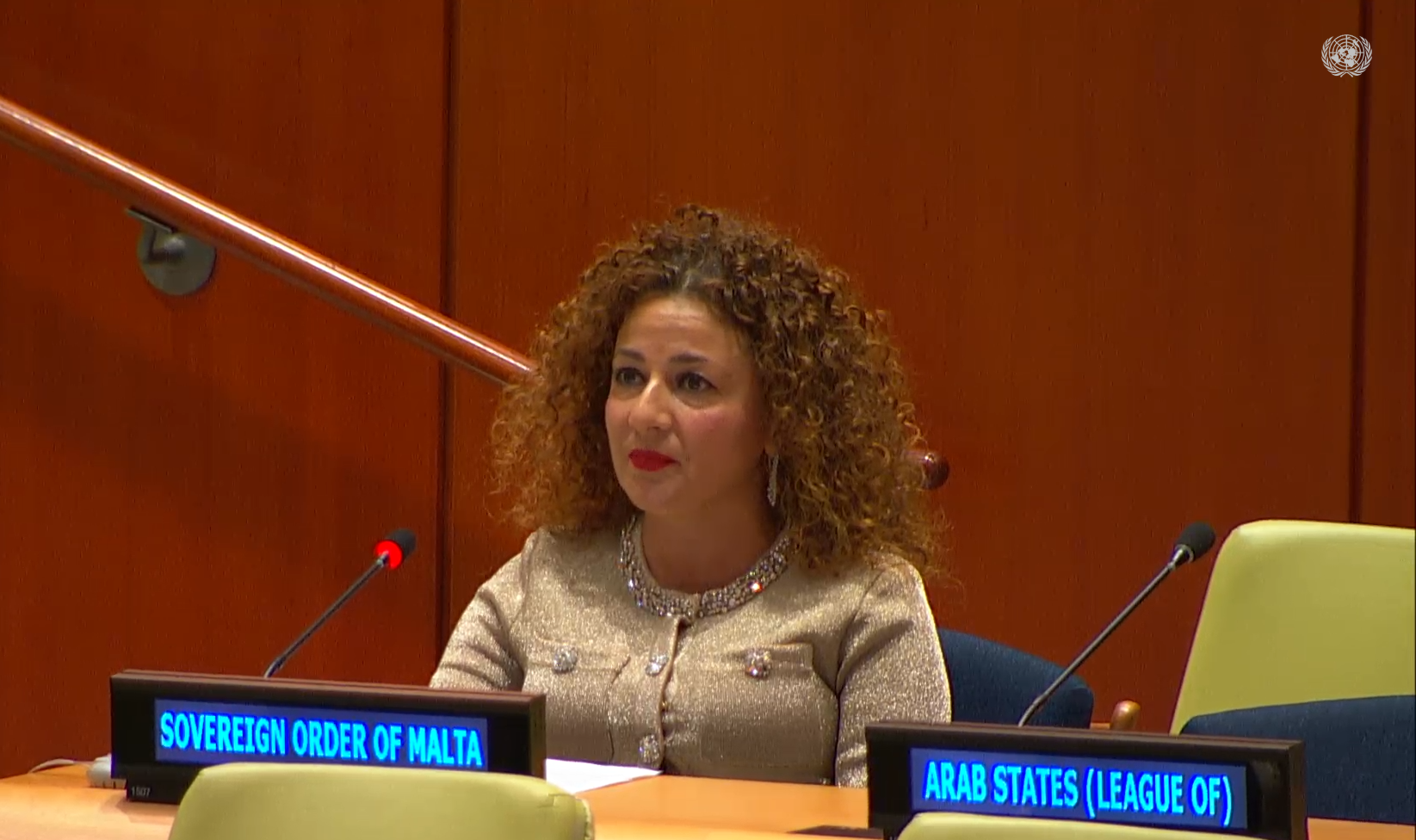
On 16 October 2026, Ms. Marissa Blackett, Counsellor at the Permanent Mission of the Sovereign Order of Malta to the United Nations, addressed the Third Committee of the 81st session of the United Nations General Assembly on the right to food and extreme poverty, following a briefing by Ms. Sofia Monsalve Suárez and Ms. Elena Carolina Diaz Galan on extreme poverty and human rights.
The intervention emphasised that extreme poverty is not merely an economic challenge, but a fundamental human rights concern. When families lack access to sufficient food, safe drinking water, healthcare, education and adequate housing, their ability to exercise their fundamental rights is severely restricted, leaving them increasingly vulnerable to deprivation across generations.
Ms. Blackett highlighted the Order of Malta’s humanitarian response to these challenges, noting that its international relief agency distributed more than 476,000 relief kits in 2025, providing essential food, hygiene products and other supplies to communities affected by crises. She stressed, however, that humanitarian assistance must extend beyond meeting immediate needs to support recovery, resilience and long-term independence.
In South Sudan, the Order supported 94,911 people in accessing safe drinking water daily in 2025, helping to protect health, dignity and community safety. In Haiti, its international relief agency works with local organisations to address food insecurity through cash assistance, community and family gardens, agricultural training, water storage and income-generating opportunities. These initiatives seek to strengthen livelihoods, reduce vulnerability and enable communities to better withstand future crises.
The intervention further underlined that lasting progress requires more than the provision of aid. Respecting human dignity means ensuring that people can access essential services, earn a livelihood, participate meaningfully in their communities and shape their own futures. In this regard, the Order called on Member States to strengthen social protection systems, invest in sustainable food systems and local livelihoods, and ensure the meaningful participation of communities in programmes designed to support them.
Ms. Blackett also stressed the need for greater international cooperation to address the structural causes of extreme poverty, including conflict, climate-related vulnerability, food insecurity and inequality. She highlighted the importance of sufficient, predictable and accessible humanitarian financing to ensure that assistance reaches vulnerable communities before crises escalate.
Concluding the intervention, the Order reaffirmed its commitment to the 2030 Agenda for Sustainable Development and its goal of eradicating extreme poverty and hunger. As 2030 approaches, the intervention called for sustained investment in the dignity, resilience and agency of people living in poverty, emphasising that the ultimate objective of humanitarian action must be not only to help people survive crises, but also to enable them to recover, rebuild their lives and thrive.