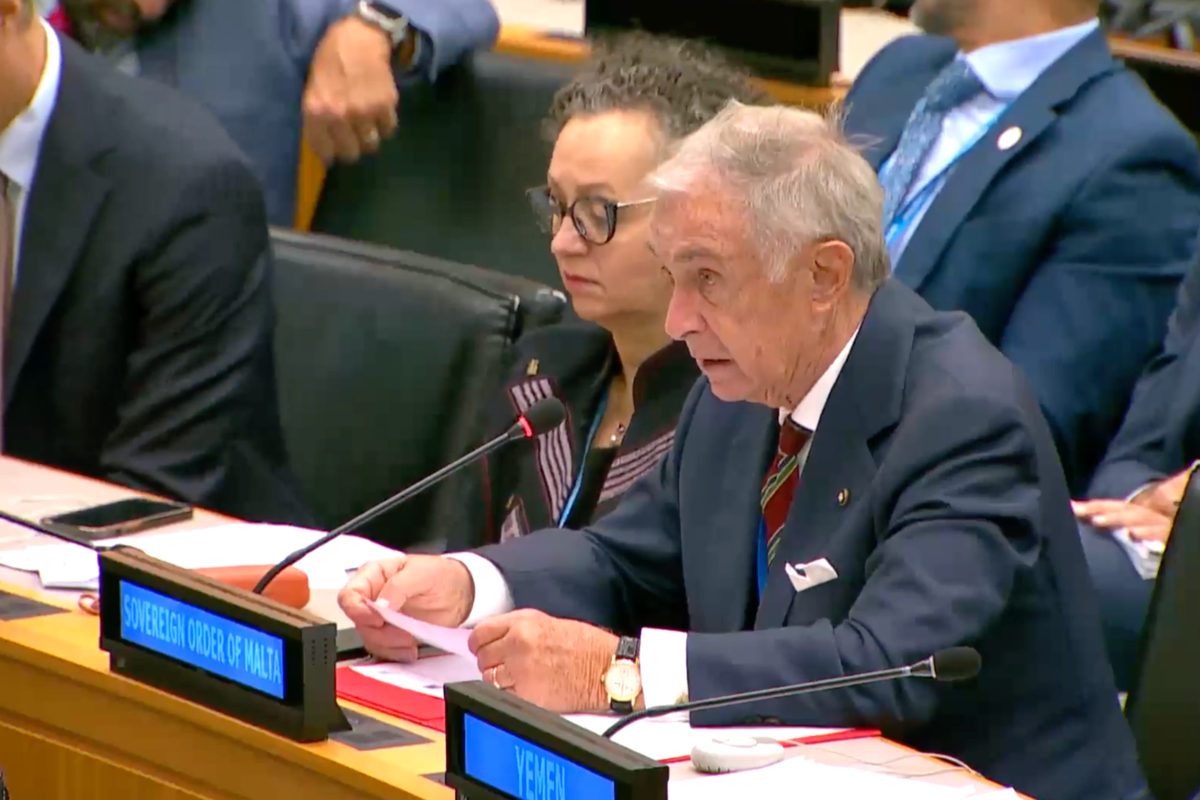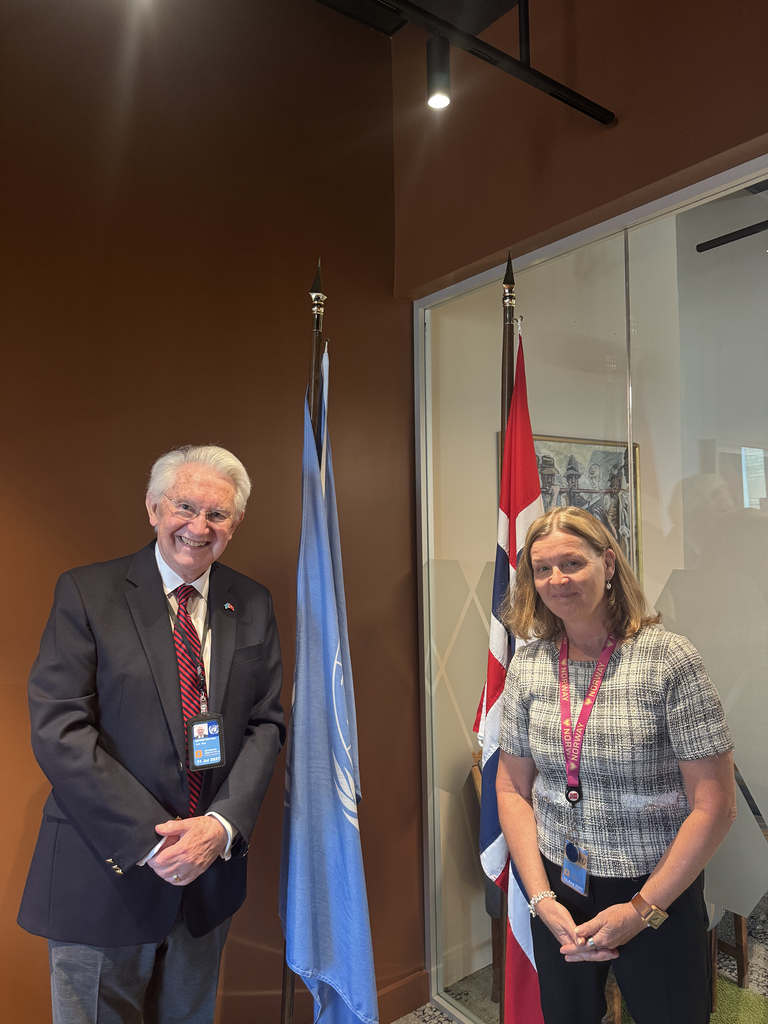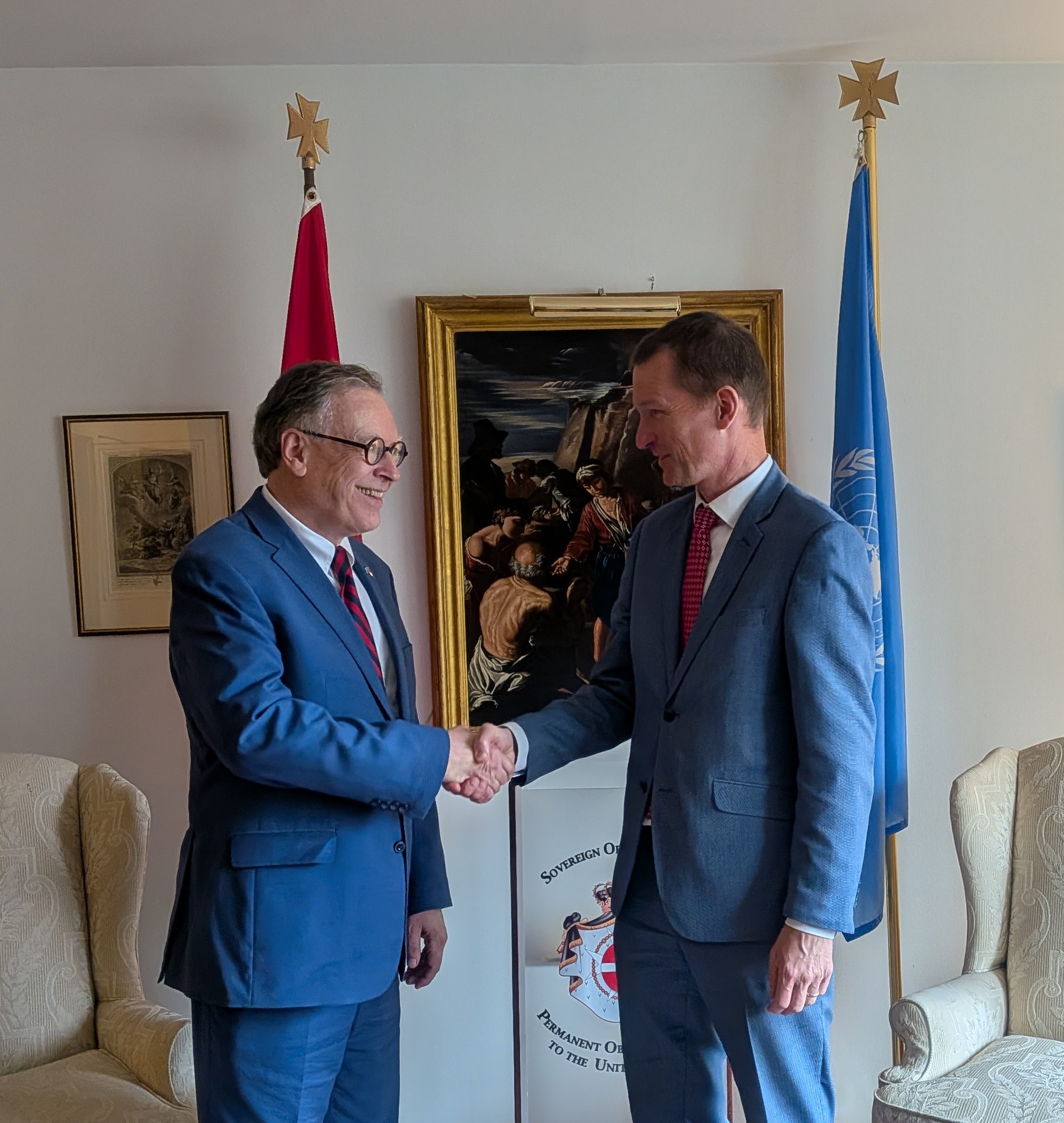
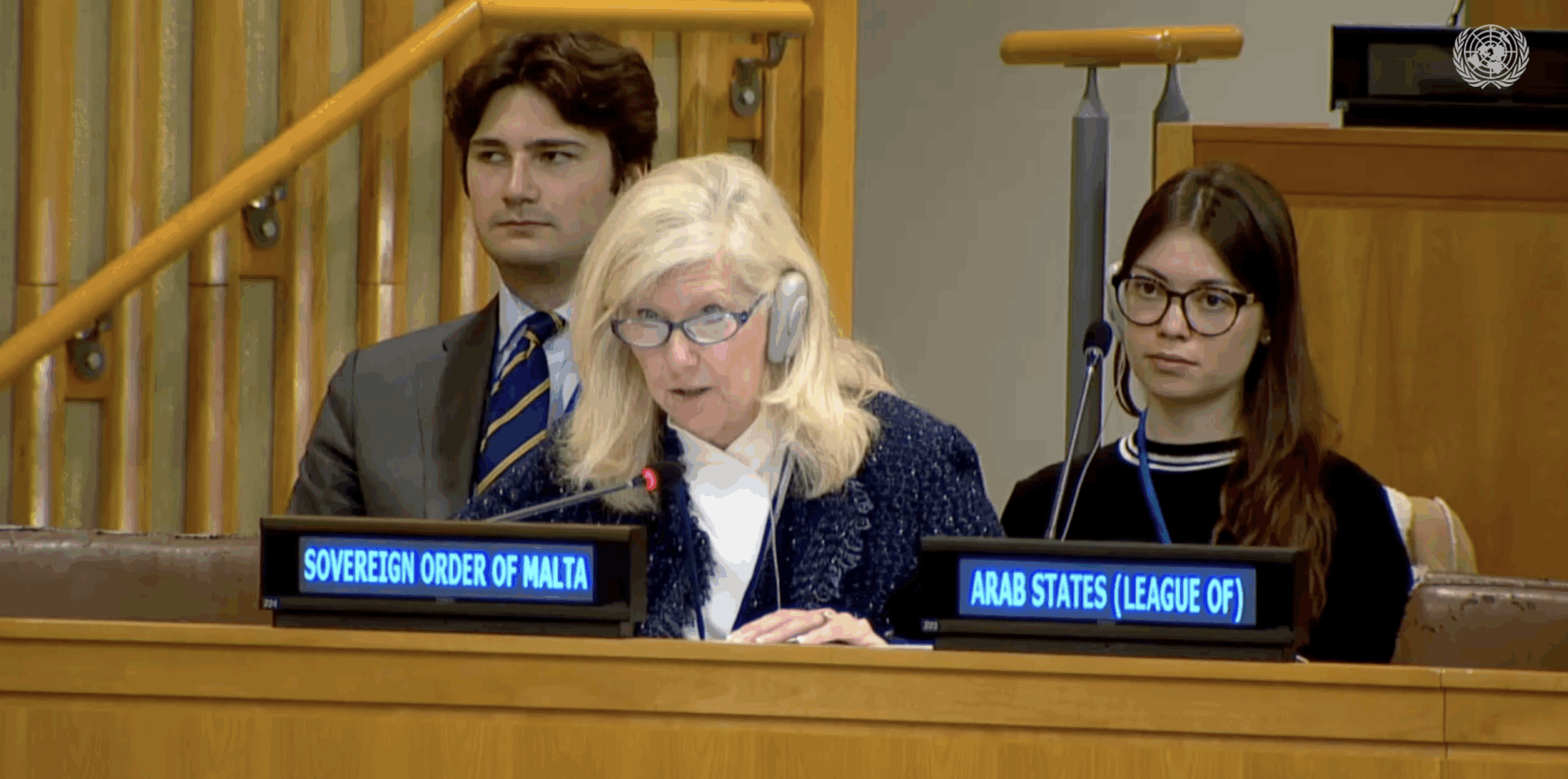
On October 31st, the Third Committee of the General Assembly held a session on trafficking in persons, especially women and children, featuring a statement by Ms. Siobhán Mullally, Special Rapporteur on trafficking in persons, and an intervention from Mrs. Deborah O’Hara Ruskowski, Special Advisor on Human Trafficking to the Sovereign Order of Malta.
Ms. Mullally opened her address by expressing gratitude to Member States for their engagement during her mandate and announcing that this would be her final presentation to the Third Committee in her capacity as Special Rapporteur. She also briefed the Committee on her recent country visits to Liberia and the Democratic Republic of the Congo, and noted with appreciation the upcoming mission to Chad scheduled for February next year.
Presenting her annual report on child rights and child trafficking in conflict situations, Ms. Mullally described the alarming rise of conflict-related child trafficking as both widespread and systemic. One in four children today, she noted, lives in a country affected by conflict, fragility, or disaster, environments where the risk of trafficking is exponentially higher. Children are trafficked for recruitment by armed groups, sexual exploitation, forced labour, and child marriage, often facing continued vulnerability and re-trafficking upon release.
She stressed that these practices are deeply gendered and shaped by intersecting forms of discrimination, including racism, xenophobia, and marginalisation of Indigenous, minority, and displaced children. Boys, she added, are often unrecognised as victims of sexual exploitation due to entrenched gender stereotypes. Survivors who become pregnant as a result of conflict-related sexual violence, as well as children born of wartime rape, face further stigma and exclusion.
Ms. Mullally highlighted the lack of adequate protection and accountability mechanisms, noting that child victims of trafficking are often invisible in transitional justice processes and that assistance rarely addresses their specific gender and age-related needs. She called for robust child protection systems, access to psychosocial care, education, and legal identity, and the integration of anti-trafficking responses into peacekeeping and humanitarian operations.
She further emphasised that trafficking in persons during armed conflict may amount to war crimes under the Rome Statute, intersecting with other grave violations against children recognised by the Security Council. In this regard, she drew attention to the 2024 joint study by her mandate and the Special Representative of the Secretary-General for Children and Armed Conflict, which offers practical recommendations to strengthen prevention, protection, and accountability frameworks.
Concluding her statement, Ms. Mullally urged States and the international community to take decisive action to end impunity for trafficking in conflict situations and to uphold their obligations under the Convention on the Rights of the Child. Failing to act, she warned, would perpetuate the suffering of the world’s most vulnerable children.
Speaking on behalf of the Sovereign Order of Malta, Mrs. Deborah O’Hara Ruskowski reaffirmed the Order’s deep concern over the persistence of human trafficking, describing it as a “modern form of slavery” that continues to prey on the most vulnerable. Despite its explicit prohibition under Article 4 of the Universal Declaration of Human Rights, she recalled that an estimated 50 million people remain enslaved globally, a moral tragedy with grave social and economic consequences.
Special advisor, Ruskowski underscored that the rise in modern slavery is linked to systemic vulnerabilities, including poverty, armed conflict, forced displacement, and the effects of climate change, which disproportionately impact women, children, migrant workers, and minorities. She also highlighted the growing misuse of technology, such as artificial intelligence and encrypted communication tools, which enables traffickers to expand their networks while evading detection.
Outlining the Order’s three-pillar strategy of prevention, protection, and partnership, Mrs. Ruskowski detailed its ongoing efforts to combat trafficking through a victim-centred and collaborative approach. Since 2017, the Order has worked actively in this area, and in partnership with UNITAR since 2024, has developed online training and high-level events to support law enforcement and humanitarian workers. These initiatives aim to raise awareness of often-overlooked populations, including migrant domestic workers, fishermen, and those displaced by climate-related disasters.
She further described the Order’s humanitarian engagement through its Italian Relief Corps (CISOM), which provides search and rescue assistance and medical care to migrants in the Mediterranean, and through Malteser International in Colombia, which offers protection services to women and children at risk of forced labour.
Citing Pope Francis’ words that human trafficking is a “moral scourge that reduces countless men, women, and children to slavery,” Mrs. Ruskowski called for strengthened global resolve to achieve Sustainable Development Goal 8.7, which seeks to eradicate forced labour and modern slavery. She concluded by urging the creation of concrete partnerships between governments, the technology sector, and humanitarian organisations to disrupt online trafficking networks and better protect victims.
The discussion reaffirmed that addressing trafficking in persons, especially women and children, requires sustained cooperation among States, humanitarian actors, and civil society. The Sovereign Order of Malta remains steadfast in its commitment to protecting the dignity and freedom of every person, working tirelessly to build a world free from exploitation and slavery.