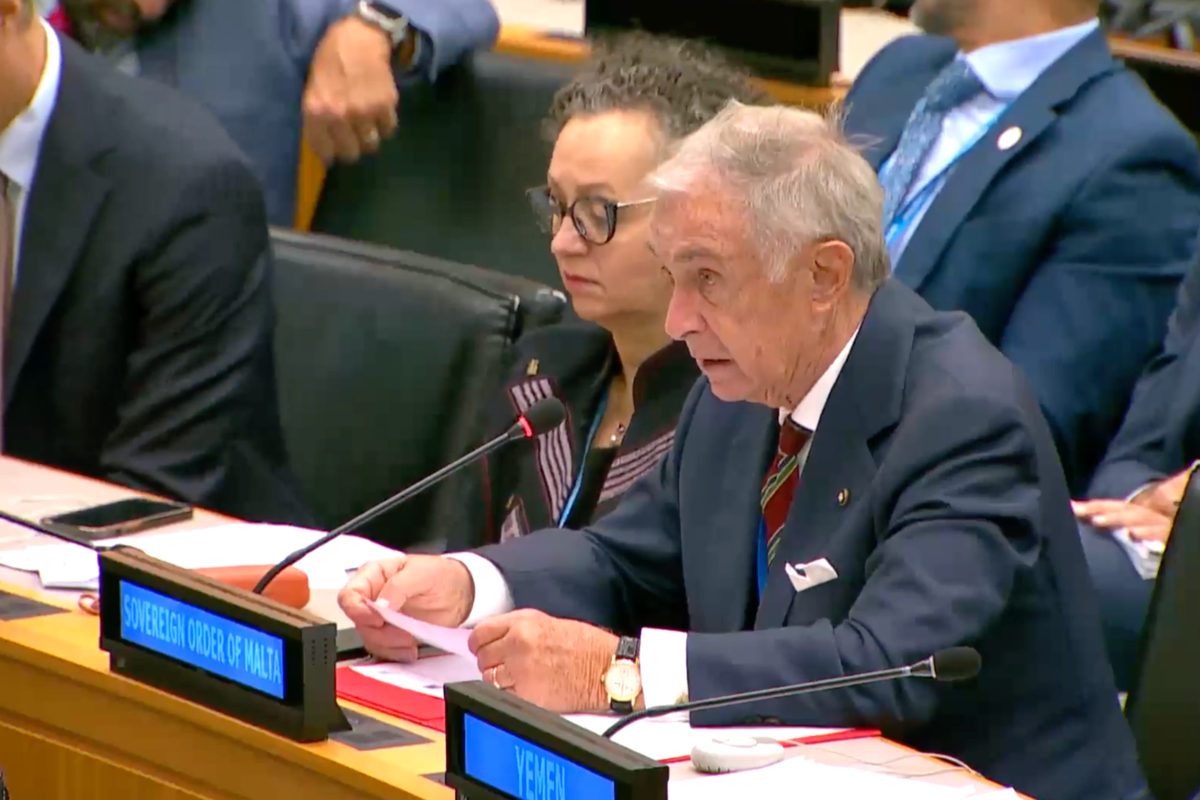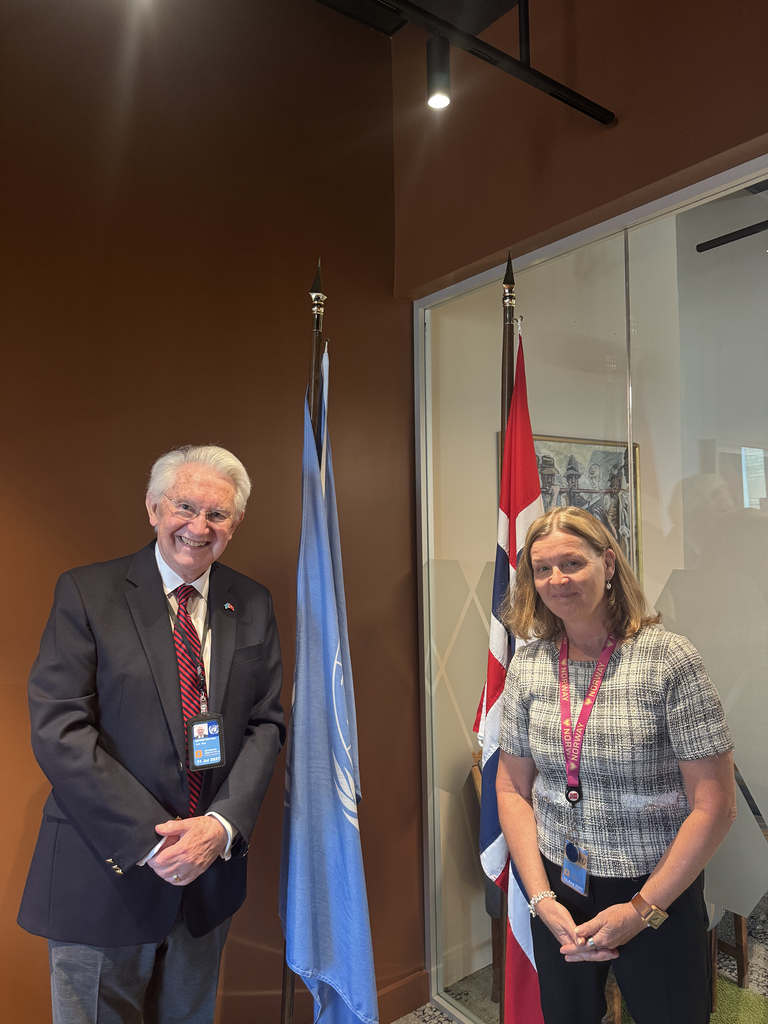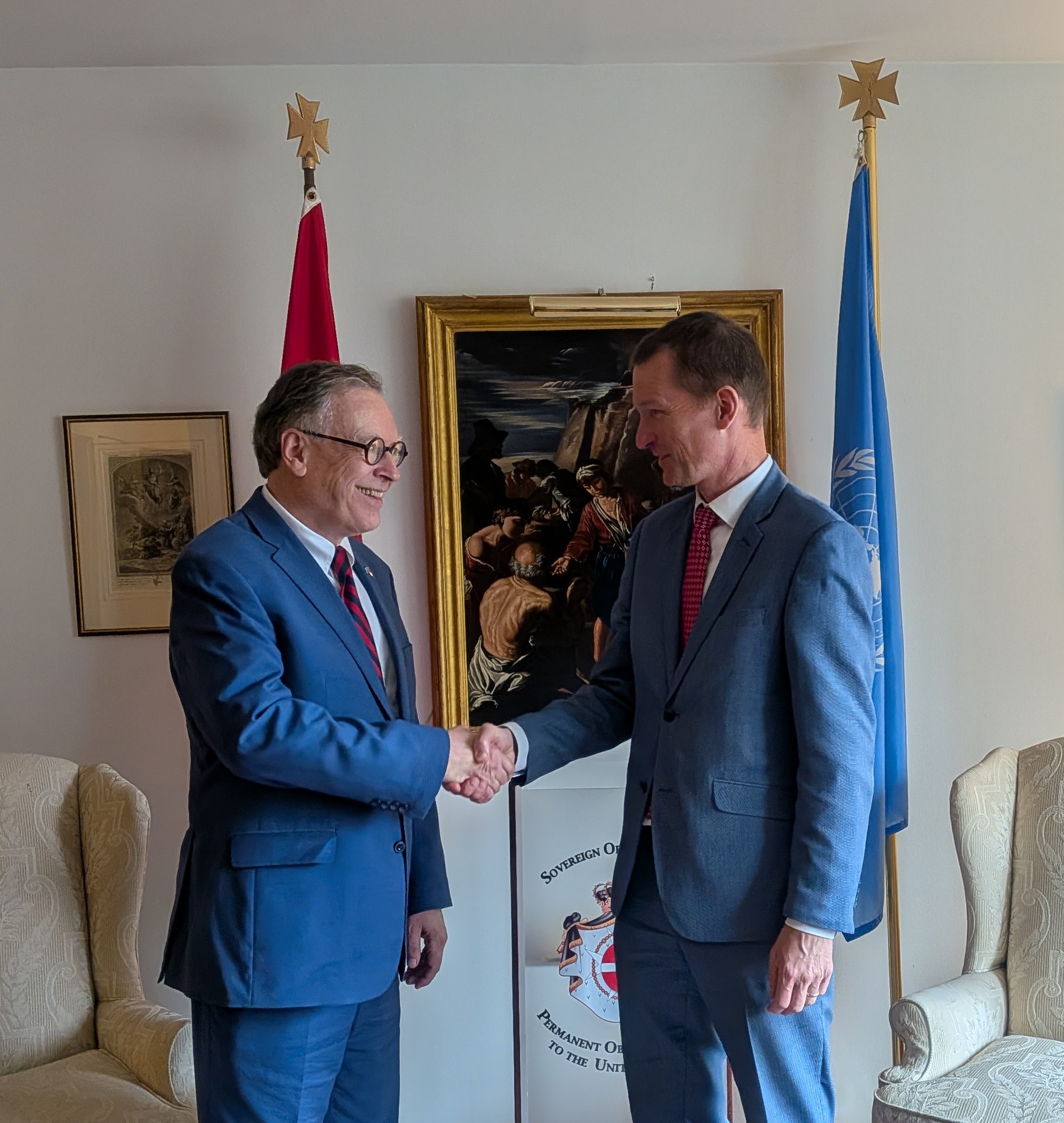
On November 6, 2025, Counsellor Fra’ Nicola Tegoni, speaking on behalf of the Sovereign Order of Malta, addressed the Third Committee on the Human Rights of Refugees, led by the High Commissioner for Refugees, Filippo Grandi.
The High Commissioner for Refugees’ final address to the Third Committee on November 6, 2025, reported a surprising development: the global number of forcibly displaced people had decreased for the first time in nearly a decade, from 123 million to 117 million. This drop was primarily driven by the return of Syrian refugees and internally displaced persons, which, despite the continued volatility of the region, illustrated the dynamic of voluntary return. However, this positive statistic was tempered by the High Commissioner’s condemnation of forced returns of Afghans, mainly from Iran and Pakistan, which push vulnerable populations back into danger and are ultimately counterproductive to stability. Filippo Grandi affirmed the enduring relevance of the 1951 Refugee Convention as the cornerstone of asylum, while advocating for a strategic, ‘route-based’ approach to managing complex, mixed movements of refugees and migrants, emphasizing that solutions do not lie in restrictive practices but in upholding the principle of non-refoulement and shared responsibility.
The High Commissioner then focused on the need for sustainable humanitarian responses and the devastating impact of sudden financing cuts. He stressed that the future lies in the inclusion of refugees into existing national and local structures of host countries—a model of “investing in self-reliance” through access to education, work, and services. This approach requires shared financial responsibility and development investments, citing successful partnerships with the World Bank. Against this backdrop of strategic needs, the High Commissioner warned about the $1.3 billion reduction in UNHCR’s projected funding for the year, necessitating a 30% reduction in workforce and major cuts to lifesaving and life-changing activities globally. He countered the argument that these cuts would lead to greater efficiency, asserting that they will only make it harder to deliver on UNHCR’s critical mandate.
Counsellor Fra’ Nicola Tegoni began by reaffirming that the right to seek and enjoy asylum is a universal human right, enshrined in the 1951 Refugee Convention, which promises that no person fleeing persecution shall be left without protection. He then highlighted the immense strain on this promise: more than 117 million people are forcibly displaced globally, with the majority hosted by low- and middle-income countries, severely straining resources. He noted that for millions, temporary camps have become places of protracted uncertainty, where deprivation compounds vulnerability through overcrowded shelters, insufficient food, and limited medical access. Further compounding the crisis, growing xenophobia threatens to erode the very spirit of asylum itself.
The Sovereign Order of Malta, through Malteser International, works daily to uphold the dignity and rights of those forced to flee, with its teams active in many global hotspots. Fra’ Tegoni provided concrete examples of this work: in Türkiye, the Order supports rehabilitative care for Syrian refugees; in Bangladesh, it provides medical care and nutrition for the Rohingya; and most recently, in Ukraine and neighboring countries, the Order is delivering food, shelter, and medical assistance, running field kitchens and emergency shelters. Across all its operations, the Order strives to ensure that even in displacement, life can retain dignity and hope. He asserted that humanitarian response must extend beyond mere survival; it must enable participation and integration so refugees can rebuild their lives and contribute to their new communities.