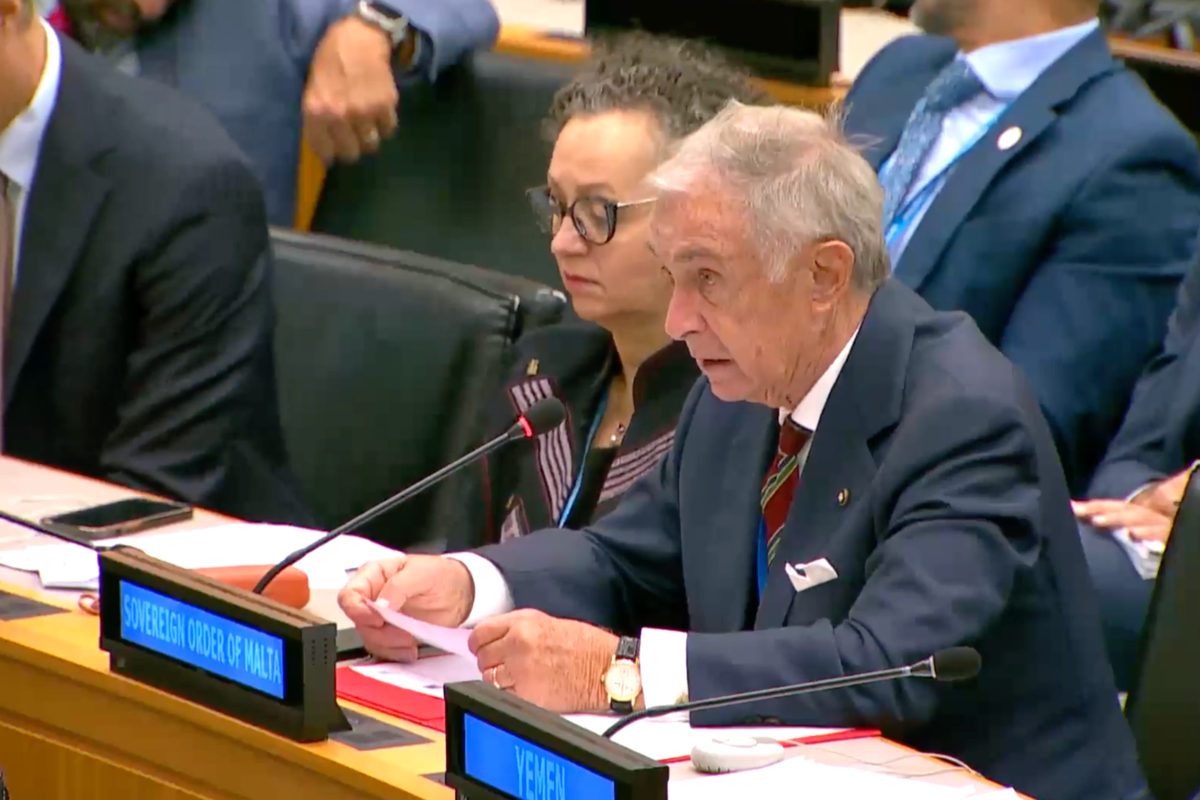
On October 28th, Counsellor Mrs. Marissa Blackett delivered a statement at the United Nations General Assembly Third Committee on the situation of human rights in Myanmar.
The meeting featured three high-level briefings. Ms. Julie Bishop, the Secretary-General’s Special Envoy on Myanmar, described a nation “on the brink,” five years after the military takeover. She reported that Myanmar’s political crisis—exacerbated by natural disasters—has left civilians trapped in cycles of violence, instability, and poverty. Noting that “all sides remain bent on a military solution,” she expressed grave concern over indiscriminate attacks on civilians and the ongoing restrictions on humanitarian access. She called on all parties to end hostilities, release political prisoners, and ensure inclusive, free, and fair elections in accordance with international standards. She also commended ASEAN’s efforts, particularly Malaysia’s leadership as current Chair, in sustaining regional dialogue and humanitarian cooperation.
Mr. Nicholas Koumjian, Head of the Independent Investigative Mechanism for Myanmar, reported a sharp escalation in the frequency and severity of international crimes. He stated that the mechanism has collected over 600 witness testimonies and verified evidence of torture, sexual violence, and extrajudicial killings by both military and opposition forces. The mechanism is prioritizing investigations into airstrikes on schools, hospitals, and places of worship, and has shared evidence with the International Criminal Court and the International Court of Justice. He warned that reduced funding could force the loss of key personnel, including experts on gender-based crimes, and appealed to Member States to sustain support for accountability efforts.
Mr. Thomas Andrews, Special Rapporteur on the situation of human rights in Myanmar, described worsening humanitarian and human rights conditions, calling Myanmar “a crisis made invisible to much of the world.” Nearly 22 million people now require humanitarian assistance, while 16.7 million face acute food insecurity. The massive March earthquake, which left over 200,000 people homeless, was followed by intensified airstrikes and civilian casualties. He condemned the junta’s weaponization of aid—blocking relief deliveries, looting supplies, and conscripting volunteers—and reported that attacks on the healthcare system continue to rise, with 169 incidents recorded in 2025. He stressed that global funding cuts have forced the World Food Programme to reduce assistance to millions, and urged Member States to deny the junta “the money, weapons, and legitimacy” sustaining its rule.
Representing the Sovereign Order of Malta, Counsellor Marissa Blackett reaffirmed that the deteriorating humanitarian and human rights situation in Myanmar remains a matter of grave concern. She highlighted that over three million people are internally displaced and more than 100,000 refugees are hosted across nine main shelters in Thailand. Through its humanitarian relief agency, Malteser International, the Order continues to provide life-saving assistance in two of these shelters, including food distribution, medical care, and sanitation support. Within Myanmar, Malteser International’s WASH teams deliver safe drinking water, repair pipelines, and build emergency latrines, while local partners distribute hygiene kits and non-food relief items to restore dignity to affected families.
She further noted that the Order maintains health and social programmes across Rakhine and Eastern Shan—supporting communities affected by tuberculosis, malaria, and HIV—and is implementing a disability-inclusive project in Kayin State to strengthen disaster preparedness. The Order also partners with UNICEF to prevent and address sexual exploitation and abuse. The Counsellor urged all parties to uphold ceasefire agreements and to allow humanitarian assistance to flow freely and safely, calling for the establishment of humanitarian safe zones. She concluded that international support must not waver: only sustained cooperation and compassion can help the Burmese people recover the dignity, stability, and peace they so profoundly deserve.